
Archives
Use Toilet Paper not Tissues
Here is a simple demonstration by Tristan from The Lone Drainer And Pronto showing why you should use toilet paper rather than facial tissues in the bathroom.
Toilet paper breaks down when it gets into water, whereas facial tissues bind together rather than falling apart.
Beware, facial tissues can cause a costly blocked drain.
Use toilet paper, not tissues.
Shower outdoors more often
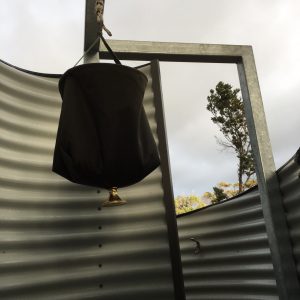
With our hottest summer on record, many of us have been showering outdoors. It’s a perfect opportunity to water the garden and the lawn, stay cool ourselves and save water.
Some clients have us set up a permanent outdoor shower in the garden or near the swimming pool just to rinse off.
I reckon simple is best. Good old corrugated and canvas.
Our correspondent enjoying the Three Capes Track in beautiful Tasmania, also reports it was 13°C.
Urgent hot water help
Its really important to know a few simple things about your water heater.
I just had an emergency call from Emma, who returned from visiting the UK for Christmas. While she was away her water heater leaked through the kitchen cupboards, ruined the carpet throughout her home and flooded the property below.
The neighbour below had to force entry into her unit to turn off the water to protect his property.
Over the phone, Emma asked for help replacing her existing water heater.
I asked her to send a picture of the heater and I now know:
- There is no safe tray under the heater. Installing a safe tray to prevent future flooding should be considered.
- The water heater currently is an 80Ltr unit. The modern version is slightly larger and won’t fit in the cupboard. The cupboard may need to be dismantled to remove the existing and fit a new unit.
- A 50-litre heater may also be too big. (Please check the cupboard dimensions)
- The current water heater does not have a tempering valve fitted. Australian Standard states “A tempering valve to be a part of any new hot water installation”.
- There is a flexible connection between the Duo valve and the heater. Australian Standard states “Flexible connections do not comply”.
Does the cold water control valve that shuts off the water to your entire home work efficiently? It will need to, so that the Duo (control) valve the water heater can be worked on.
Take 3 tips.
- Know where your water heater is.
- Know how it turns off.
- Turn off the water and electricity or gas before you go on holidays.
If you’re not sure…ask me.
Why you should look inside your pipes
You’ve got a blocked drain and your plumber puts a camera in the drain to see whats going on down there!
What happens after that?
Plenty of homeowners don’t get to see the footage their plumber has taken of the inside of their pipes. For some reason, the plumber chooses to keep what is going on in your pipes a secret from you.
Why?
Like any medical scan or x-ray of your body, it shouldn’t be kept a secret from you.
You should be able to see what’s going on in your drains so you can get a greater understanding of how the drains work. Or don’t!
Then, you can make an informed decision about how to repair your pipes and get other professional opinions on how to do that.
There are many ways to maintain your pipes and drains.
So if your plumber recommends a particular method of pipe repair after he puts a camera in your drains then tells you what he saw… but doesn’t show you, ask him for a copy of the pipe survey.
After all, he has billed you for it.
This survey shows a section of re-lined pipe with earthenware pipes and tree roots.
Toilet Hygiene #2
A recent study showed 95% of men and women say they wash their hands after using the toilet, especially a public toilet.
Funnily enough, only 67% of people actually do wash their hands after using a public loo or the toilets in their workplace. There have been quite a few surveys done on this topic and some innovative ideas to check on whether we did or didn’t wash.
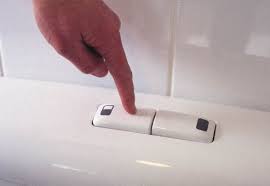
It’s quite well documented that the toilet flush button is one of the most un-hygienic places in the bathroom and I’m hoping that all our readers apply the simple rule.
Flush when you’re finished! But, think about it, What did you do before you flushed the loo?
So, wash your hands after a trip to the bathroom.
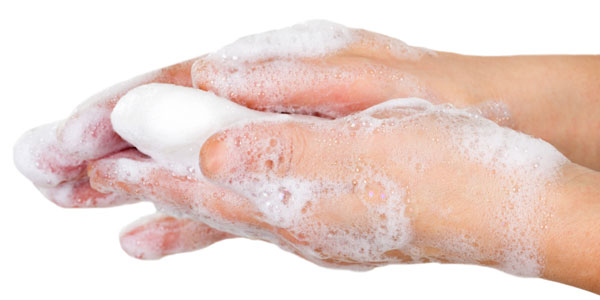
Wash your hands
Toilet Hygiene #1
Q. What’s the 3rd most un-hygienic place in the bathroom?
A. The toilet flush button.
Who’d have thought? Now, wash your hands!
Why this plumber makes a regular blood donation

Its a simple thing to give blood. It doesn’t hurt at all! In fact it makes you feel really good…. and you get to help someone else.
Who knows, I may get to help you or your loved ones.
So what does that have to do with plumbing……
Well, only that all of your pipes need flushing from time to time. Even your personal pipes!
This is Furk! Having FUn at woRK.
Get your personal pipes checked…. I did!
November is Men’s Health Month and my reminder came in the mail. “Its time to get your pipes checked again” said the friendly letter from my Colorectal surgeon. It spelt out the process, the fasting, the preparation, the costs, the procedure on the day, what to expect afterwards, the discomfort but most of all…….. the benefit!
So on Sunday I began the preparation for a colonoscopy on Monday. After a healthy and hearty breakfast on Sunday morning it was a time of fasting. No food! Then, from early afternoon into the evening I had to take not 1, not 2, but 3 doses of fairly unpleasant medicine that would clean my internal pipes so the surgeon could put his camera through them.
Now all this makes sense to a 54 year old father of 3 healthy and happy sons whose father, after being diagnosed with Prostate cancer passed away a few years ago.
So, I hear you ask, why is your plumber telling you this?
If your body is a temple as mine is, and your home is your castle, then it’s appropriate to get your pipes checked, especially if your castle has a history of problems or blockages in your sewer pipes.
There are many parallels between a Colonoscopy and a Drainoscopy.
To get a Drainoscopy is easy!
We clear your pipes and then put a specialized drain camera through the pipes to find out what is actually going on in there. Then we take the vision and put it on our YouTube channel with a description of what is going on in the pipes. You can see it, you can share it, you can get a second opinion, you can evaluate the information and understand exactly what is going on underground or in your pipes.
Yes, it is a little uncomfortable. But now I know that after Dr “L” has treated 2 areas of interest and checked my prostate, my pipes are in good condition. I’ve seen the pictures. And at the appropriate time, he will send me a reminder for my next Drainoscopy er Colonoscopy.
So to end on a high note watch this fun YouTube clip.
Welcome to Movember – Men’s Health Month
Men’s health is something very close to my heart. Having lost my dad in 2009 to prostate cancer at 73 is something that changed the way I look at my own health and health checks.
Over this month Movember I plan to share the personal stories of plumbing colleagues, clients and work mates. They’re all just normal men who felt a slight change in their bodies and had the courage and the good sense or friendly push to go and get things checked out.
I’ve got some simple health tips that work for me and if they work for me, then, they’ll work for you too! I’ve got some great summer recipes.
So, I can hear you asking…. What the hell has men’s health got to do with plumbing? Well it has everything to do with plumbing. Our bodies are temples, our home is our castle and our pipes within our temple and our castles need to function properly or we are “up shit creek”!
I’ve got some YouTube clips to share; some funny, some educational, some frightening!
Water Saving Tips for your Garden

Did you know about 35% of household water usage occurs in the garden?
In my daily rounds the common theme is how the spring has unfolded, the gardens are in bloom, the Jasmine flowers have come and gone. We’ve had very little rain lately on the coast but, after recent temperatures reaching 36 degrees, our gardens are dry.
It helps if you know the needs of your plants. More plants die from over watering than lack of water so don’t drown ’em.
So here are a few water saving Do’s and Dont’s:
– Do choose water efficient plants and grasses.
– Do mulch your garden.
– Do install a drip feed system to water the gardens and lawns. It’s pretty easy to do. If you need a hand just ask us.
– Don’t water in the heat of the day. Heat = Evaporation and the watering process can burn your lawn and plants. Water early or late. Cool is good!
– Don’t assume the garden needs watering. Check the soil to see whether its dry before turning on that hose.
– Don’t water for long periods if your garden slopes. The water just runs off. Allow it to soak in!
– Don’t water on windy days especially with sprinklers and fine sprays. Wind increases evaporation.
– Don’t water everyday, if its practical give em a drink twice a week to encourage the roots to grow deeper
– Don’t water for 1-2 weeks after a good soaking rain.
– Don’t forget to drink yourself. Personal hydration is even more important!
Just Add Water
Everyone is talking about the upcoming summer like its the imminent return of an old old friend. My sunrise learn-to-surf visits to the local beaches find them full of boys and girls and boot campers getting buffed for the summer unveiling of the new bod. And everyone is drinking water out of water bottles.
Now, hydration is not a new theme and the sweat produced to work that body needs to be topped up with good old H2O, Adams ale, water, the universal solvent. Its well known that people who engage in strenuous physical exertion or live in a hot climate (that’s us people) need to drink plenty of water.
After swallowing more than my share of the Tasman Sea most mornings, I guzzle water from the beach taps to re-hydrate myself.
The human body is anywhere from 55% to 78% water depending on your body size. A simple rule of thumb, 2/3 of our body consists of water.
Did you know that your tissues and organs are mainly made up of water?
• Muscle consists of 75% water, Blood consists of 83% water, Bone consists of 22% of water, Brain consists of 90% of water.
• The recommended amount is 8-10 glasses of aqua per day.
• So remember, if your gonna work it, you have to re-hydrate it.
• Dr Dave says, Drink more water!
Happy Plumbers + Great Service = Happy Clients
We have a great team of plumbers here at The Lone Drainer and Pronto! They are good at their job. They Love their work. We call it “Furk”! Having FUn..at..woRK
On Monday afternoon, 27th October 2014, I got the following email:
Hi Dave,
Thank you so very much for taking my phone call early this morning and organising Chris and Leigh to come to my house so quickly.
Chris and Leigh arrived, knocked on my door, introduced themselves with smiles and put me at ease that my sewerage problems would be fixed.
Such a relief. I could not have had nicer people to arrive on my door step. Both well mannered and very pleasant people to talk to.
I also had a problem with my kitchen sink tap. Unfortunately I had to leave Chris at the kitchen sink as I had to go to work. He did a good job and I now have a brand new tap looking at me! Both men were very efficient.
Again, thank you for being so prompt and getting the job on its way.
Kind regards,
Julie B. Randwick NSW

Leigh and Chris with Plunger
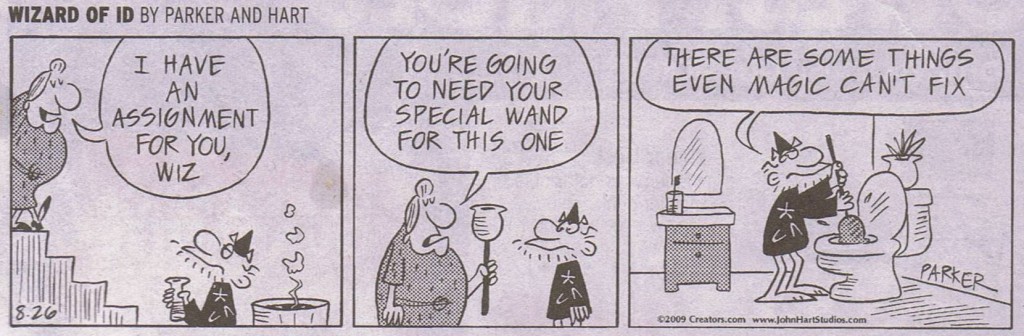
My Plumber is a Wizard
Sometimes its great to laugh at ourselves.
I’ve always loved the Wizard and this is a good one!
Help! Where does my Hot Water turn off?
“HELP!“
“My water heater is spitting out hot water and steam. Can you get over here Urgently?” “I don’t know how to turn it off and I think it’s going to explode!”
Monday morning brought a call from Deborah in Randwick. It sounds like a job for The Lone Drainer ……and Pronto.
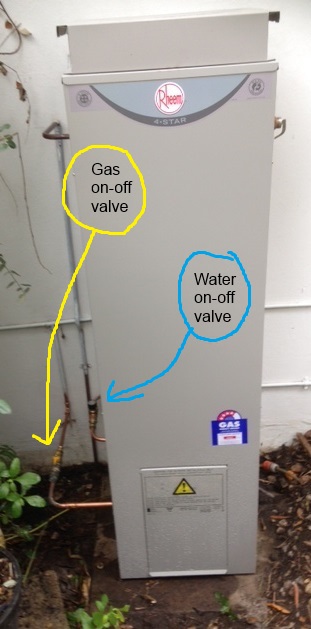
Of course we were able to rescue Deborah. We replaced the water heater and the gas and water shut-off valves that controlled the unit. But, how many people don’t know how to turn off their water heater?
The image below shows where to shut off the water and gas supply to the heater. Why don’t you practice turning the water heater off when it isn’t urgent?
If you need help Call us 02 9664 4990
Be careful what you put in your toilet!
Last night we had an emergency call out to a client that we had helped recently. But first, let me paint a picture.
Two weeks ago “Kath”, who lives in a 1920s Coogee building had a blocked shower. Kath said it had been slow to drain since she moved in 6 years ago. A little investigation revealed the original pipes ran through the concrete floor and were corroded internally. Corrosion is one of the drawbacks of living so close to the ocean.
Anyway, The Lone Drainer and Pronto Super-heroes Leigh and Chris, got her shower running “better than ever before”. In fact Kath rang our office to compliment the boys on their Ps, Punctual and Professional.
So I was surprised to get her evening call-out. It turns out her toilet was blocked! But the shower and basin were draining better than ever before. The building has a 2 pipe system; the shower, bath, basin and kitchen sink run down one pipe, while the toilet waste goes down the other.
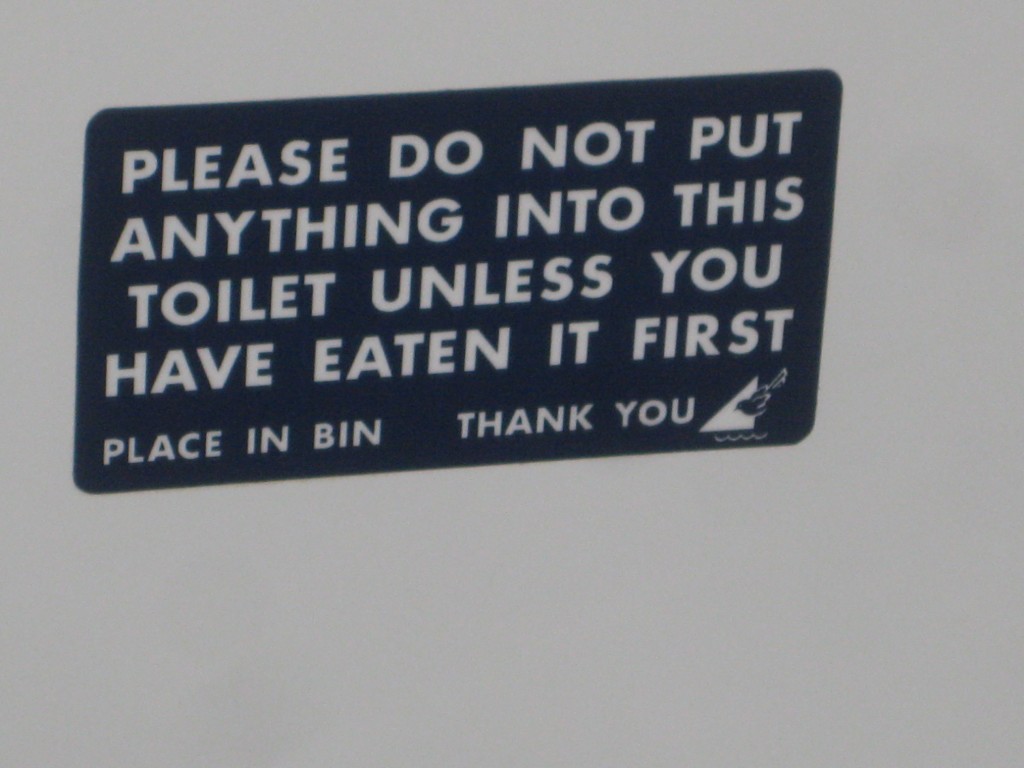
After a little investigation we found there were tampons caught on the corroded inside of the waste pipe. It was reasonably simple to clear the blockage. Although Kath was a little embarrassed we assured her the best way to prevent it happening again was to follow this simple rule.
Stop Leaking Taps
As a plumber, the majority of house calls I make have to do with leaking taps. Obviously in most cases it is correct to call a plumber but some times we are called to houses to carry out a simple plumbing job that takes five minutes which could have easily been completed by anyone with a little know-how.
Here are a few pointers that can help to avoid problems like these:
- Treat taps gently. They should be turned off with thumb & forefinger. If you are having an arm wrestle turning your taps off, stop it!
- Try to repair a dripping tap if you can. Always turn the water supply to the house off first!
- Simple repairs can be done by anyone. Don’t forget the o-rings, tap washers, tap seats and fibre washers. Lubricate them all.
- There are so many types of taps available today, even the pros need to seek advice.
- There is no shame in not being able to repair a dripping tap. I have seen plumbers who are grown men cry over leaks like these.
Flush with Facts #2
August is the month of the good toilet flush!
Did you know the dual flush toilet cistern was a 1980 Australian invention by Bruce Thompson, an employee of Caroma?
The dual flush toilet cistern saves 32,000 litres of water per household per year. In 2014 most modern toilet cisterns have an internal overflow tube, so if your float valve doesn’t shut off, the water runs straight into your loo, rather than overflowing onto the floor….. So the single flush toilet cistern should be a thing of the past!
Stormwater drain blockages
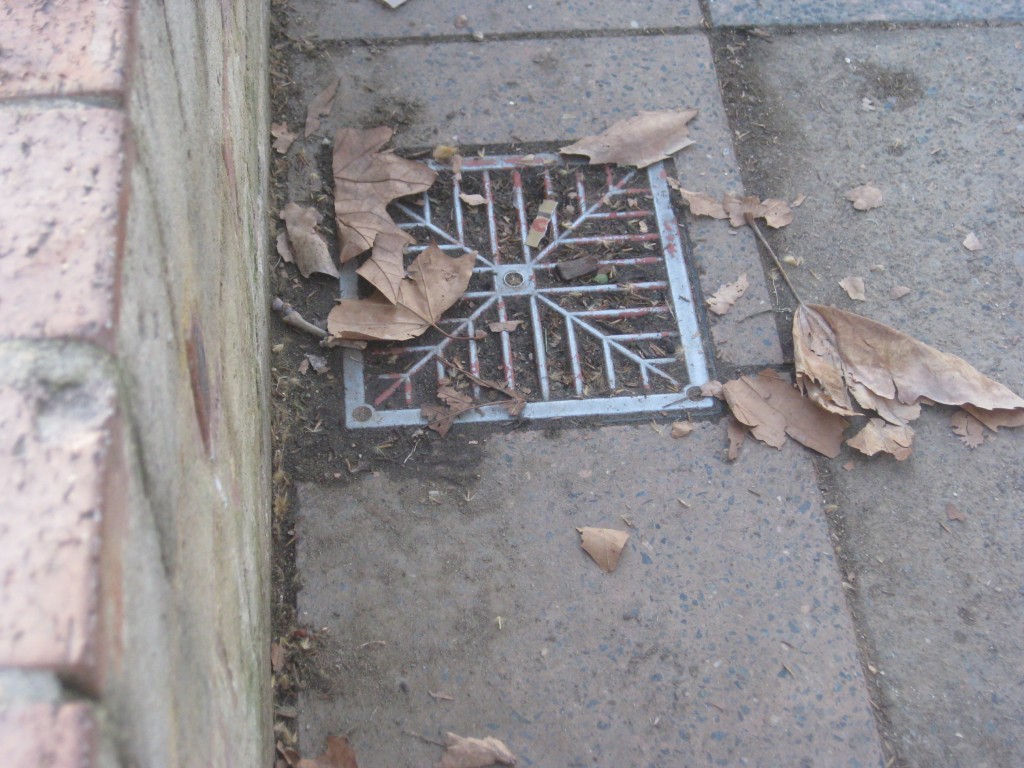
Send it down Huey! As Sydney gets through another day of torrential rain and some eastern parts of this country are getting their best rainfall for more than a year, its important to keep your stormwater gutters, downpipes, grates and drains clear.
My own roof gutters were overflowing yesterday ’cause the leaves from our deciduous tree were blocking our down pipes.
Flush with Facts
August is the month of the good toilet flush!
Flowing sewer drains, my favourite topic in the whole wide world, is Not what I mean dear readers!
I’m talking about the toilet and the cistern; the little tank of water that flushes our loo.
So here’s 3 Flush Facts:
1. The toilet flush button is the most un-hygienic place in your bathroom.
2. A full toilet flush is more water than most people in the world use daily.
3. A leaking toilet cistern can waste up to 24 litres of water daily. That’s a whopping 2160 litres of wasted water in your quarterly water rates. And that’s from just 1 toilet cistern.
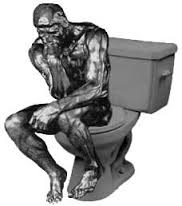
So, next time you are sitting and thinking………. Think about that!
3 Tips for Healthy Hot Water
Who had a cold shower this morning?
Winter makes the need for hot water a high priority. If you think your heater is under performing do this quick water heater health check.
1. Check the colour of your water. If its brown, your water heater has a buildup of sediment or rust.
2. Check your Temperature and Pressure Relief valve (like the one shown below), pull the lever; it should spurt out water till you let go of the lever. If it dribbles afterwards, it needs attention.
3. Does the stop valve work? Try turning it off, test the water at your hot taps and turn it back on. Ideally it should stop the water flow through the heater.

Whether your water heater is gas or electric, storage or continuous, check it regularly.
If your hot water runs out get your friendly plumber to check it over
Using a public toilet. Should I hover or cover the seat?
Here is a little fun on Friday! Have a great weekend, and wash your hands!
Common pipelines; easements, ownership and liability #2

One recurring topic of 2010 is the Ownership and liability of common water, sewer and gas pipes.
When we send out an emergency response team to a ruptured gas or water pipeline or an overflowing sewer, the first thing our team thinks about is rescuing the property under threat. Often, it is after the emergency that ownership and liability of the problem are hotly debated.
This series of 3 blog posts is aimed at clarifying some of that debate.
Our friends at the Law Reform Commission have helped to clarify this interesting subject and in part it reads:
A user of a service may attempt to disconnect the joint service and force other users of the service to bear the cost of a direct connection to the main service. Such action will however, be illegal unless conducted in accordance with the Water Board Act 1987 (Water Board (Plumbing and Drainage ) Regulation 1989),2 or a court order declaring that the common user of the service has a right to discontinue the service.
The creation of permanent rights of access is seen as a means of avoiding problems of access in respect of utility services, and applications have been made to the courts over the years to have access to and over utilities such as water pipes and sewers recognised as easements of necessity. The courts have, however, gone to considerable lengths to hold that although such an easement may be considered by a landowner to be essential for the reasonable enjoyment of property, it is not an easement of necessity, because at law, easements over such services are not considered necessary to the land itself.
Although DP 22 raised the possibility of statutory recognition of these “trespassing” services as a means of rectifying the problem, the Board of Surveyors pointed out in their submission that few authorities know with any exactitude the location of their service lines. Consequently, the Board of Surveyors opposes the creation of statutory easements over them until such time as they are properly defined on title. The Commission agrees that such a step may be expensive and premature at this stage. It would seem desirable however, that steps are taken in the long term by the relevant authorities to locate such services, properly record them and establish the appropriate rights over them.
Don’t play Noughts and Crosses when you have sewer problems

Today’s post comes courtesy of Dr Marc Dussault, The Exponential Growth Strategist. At his recent Exponential Business Building Bootcamp, he showed a series of “impossible pictures” from Swedish Artist Erik Johansson. This photo was of particular interest. This is what we want to avoid with the use of Vaporooter when tree roots get into and block your pipes and drains.
Common pipelines; easements, ownership and liability #1
One recurring topic of 2010 is the Ownership and liability of common water, sewer and gas pipes.
When we send out an emergency response team to a ruptured gas or water pipeline or an overflowing sewer, the first thing our team thinks about is rescuing the property under threat. Often, it is after the emergency that ownership and liability of the problem are hotly debated.
This series of 3 blog posts is aimed at clarifying some of that debate.
Our friends at the Law Reform Commission have helped to clarify this interesting subject and in part it reads:
In most cases, persons using utility services that pass through several properties benefit by the existence of an easement of access over that service, entitling the user to enter the property on which the service is located in order to attend to the service. However, in the absence of such an easement, the user of the service is not allowed to interfere with the service, even where that interference is for the purpose of maintenance, repair, or relocation of the service.
One explanation of why there may not be an easement is that the properties through which the service runs were once commonly owned. When the common ownership ceased, new owners may have failed to ensure that easements over water pipes or sewer lines existed for the particular part of the property they were purchasing. The problem may have arisen due to an assumption that such a right was simply transferred with the purchased property, or by an omission on the part of the conveyancer. Whatever the reason, the failure to create and register an easement has given rise to a number of lasting problems. These difficulties have been compounded by the general reluctance of the Water Board to impose on new purchasers a requirement to install costly separate connections. Many properties today do not have a viable means of creating a separate connection at reasonable cost.
Plumbers love your pets
Your Dog and Dealing with Internal Renovations
Dogs and cats find renovations very stressful: there are strangers in their home changing things, moving things around and disrupting their routine. Some of the risks involved range from escape behaviour, bad dog behaviour, territorial behaviour and the general stress of strangers and loud noises in their space. You also have the risk of injury or the potential of your fur baby being exposed to toxins. Unlike the tradesman, there are no protective masks or clothing for your pet.
Lead and Asbestos, as most of us know, are bad for us, but it’s just as bad for our pets. Years ago it was common for house paint to contain high levels of Lead in addition to Asbestos in our walls. Startlingly before 1970 most paints contained up to 50% lead. Disturbing the paint during renovations can be risky business and you need to ensure you keep yours, and your pet’s, exposure levels down and leave this sort of job to the experts!
Lead and Asbestos will only resurface if it is disturbed; your tradie could unintentionally do this and create a risk. If you’re renovating be sure to follow these simple steps to make sure your family and pets are safe from Lead and Asbestos.
Step 1 – Look into how much asbestos you will have to work around and whether your paint contains lead. The most likely places to find lead paint will be on the kitchen and bathroom cupboards, window frames, skirting boards, doors, architraves, picture rails, exterior walls, gutters, metal surfaces and fascias.
Step 2 – Use the appropriate tools and equipment for the task at hand. Protective clothing is a must! A respirator, disposable coveralls, disposable overshoes, a hat, and gloves will protect you from any dust containing lead. Find somewhere to keep your pets safe while the renovations are happening, a relative, friend or a doggy daycare is always a good idea to get the pets out of the house.
Step 3 – Prepare fully for interior or exterior work. Get experts to deal with Asbestos as there is a multitude of legislation governing the tampering and removal of Asbestos.
Step 4 – Deal appropriately with paint containing Lead. Use techniques that minimise the creation and dispersion of dust or fumes. Large portions of dust or wastewater that contain lead can contaminate the house and garden so it is best not to dry sand or use abrasive blasting. It’s always safer to avoid creating the dust as opposed to cleaning it up after as dust containing only 1% lead can be harmful.
Step 5 – Use a 3 bucket wet cleaning method to eliminate any left over chemicals.
Step 6 – Dispose of contaminated waste appropriately.
This Blog Post was kindly supplied by the Friendly Team at Paddington Pups, Queensland’s Number #1 Doggy Daycare Centre.