
Archives
Stop Leaking Taps
As a plumber, the majority of house calls I make have to do with leaking taps. Obviously in most cases it is correct to call a plumber but some times we are called to houses to carry out a simple plumbing job that takes five minutes which could have easily been completed by anyone with a little know-how.
Here are a few pointers that can help to avoid problems like these:
- Treat taps gently. They should be turned off with thumb & forefinger. If you are having an arm wrestle turning your taps off, stop it!
- Try to repair a dripping tap if you can. Always turn the water supply to the house off first!
- Simple repairs can be done by anyone. Don’t forget the o-rings, tap washers, tap seats and fibre washers. Lubricate them all.
- There are so many types of taps available today, even the pros need to seek advice.
- There is no shame in not being able to repair a dripping tap. I have seen plumbers who are grown men cry over leaks like these.
Flush with Facts #2
August is the month of the good toilet flush!
Did you know the dual flush toilet cistern was a 1980 Australian invention by Bruce Thompson, an employee of Caroma?
The dual flush toilet cistern saves 32,000 litres of water per household per year. In 2014 most modern toilet cisterns have an internal overflow tube, so if your float valve doesn’t shut off, the water runs straight into your loo, rather than overflowing onto the floor….. So the single flush toilet cistern should be a thing of the past!
Stormwater drain blockages
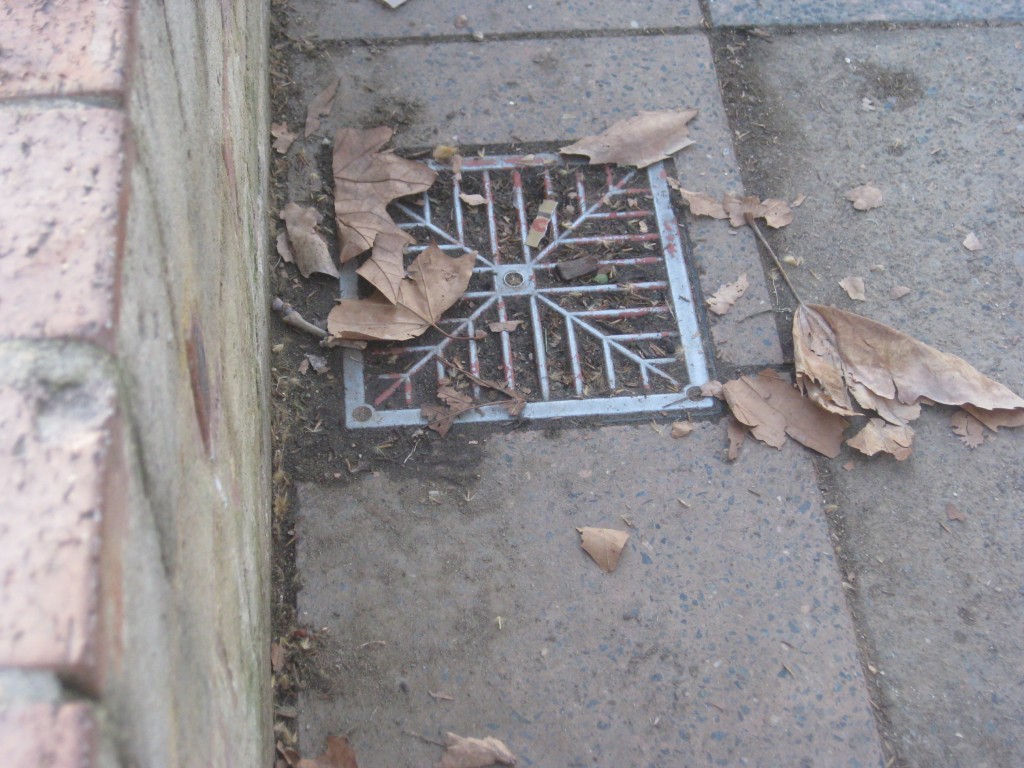
Send it down Huey! As Sydney gets through another day of torrential rain and some eastern parts of this country are getting their best rainfall for more than a year, its important to keep your stormwater gutters, downpipes, grates and drains clear.
My own roof gutters were overflowing yesterday ’cause the leaves from our deciduous tree were blocking our down pipes.
3 Tips for Healthy Hot Water
Who had a cold shower this morning?
Winter makes the need for hot water a high priority. If you think your heater is under performing do this quick water heater health check.
1. Check the colour of your water. If its brown, your water heater has a buildup of sediment or rust.
2. Check your Temperature and Pressure Relief valve (like the one shown below), pull the lever; it should spurt out water till you let go of the lever. If it dribbles afterwards, it needs attention.
3. Does the stop valve work? Try turning it off, test the water at your hot taps and turn it back on. Ideally it should stop the water flow through the heater.

Whether your water heater is gas or electric, storage or continuous, check it regularly.
If your hot water runs out get your friendly plumber to check it over
Common pipelines; easements, ownership and liability #2

One recurring topic of 2010 is the Ownership and liability of common water, sewer and gas pipes.
When we send out an emergency response team to a ruptured gas or water pipeline or an overflowing sewer, the first thing our team thinks about is rescuing the property under threat. Often, it is after the emergency that ownership and liability of the problem are hotly debated.
This series of 3 blog posts is aimed at clarifying some of that debate.
Our friends at the Law Reform Commission have helped to clarify this interesting subject and in part it reads:
A user of a service may attempt to disconnect the joint service and force other users of the service to bear the cost of a direct connection to the main service. Such action will however, be illegal unless conducted in accordance with the Water Board Act 1987 (Water Board (Plumbing and Drainage ) Regulation 1989),2 or a court order declaring that the common user of the service has a right to discontinue the service.
The creation of permanent rights of access is seen as a means of avoiding problems of access in respect of utility services, and applications have been made to the courts over the years to have access to and over utilities such as water pipes and sewers recognised as easements of necessity. The courts have, however, gone to considerable lengths to hold that although such an easement may be considered by a landowner to be essential for the reasonable enjoyment of property, it is not an easement of necessity, because at law, easements over such services are not considered necessary to the land itself.
Although DP 22 raised the possibility of statutory recognition of these “trespassing” services as a means of rectifying the problem, the Board of Surveyors pointed out in their submission that few authorities know with any exactitude the location of their service lines. Consequently, the Board of Surveyors opposes the creation of statutory easements over them until such time as they are properly defined on title. The Commission agrees that such a step may be expensive and premature at this stage. It would seem desirable however, that steps are taken in the long term by the relevant authorities to locate such services, properly record them and establish the appropriate rights over them.
Don’t play Noughts and Crosses when you have sewer problems

Today’s post comes courtesy of Dr Marc Dussault, The Exponential Growth Strategist. At his recent Exponential Business Building Bootcamp, he showed a series of “impossible pictures” from Swedish Artist Erik Johansson. This photo was of particular interest. This is what we want to avoid with the use of Vaporooter when tree roots get into and block your pipes and drains.
Plumbers love your pets
Your Dog and Dealing with Internal Renovations
Dogs and cats find renovations very stressful: there are strangers in their home changing things, moving things around and disrupting their routine. Some of the risks involved range from escape behaviour, bad dog behaviour, territorial behaviour and the general stress of strangers and loud noises in their space. You also have the risk of injury or the potential of your fur baby being exposed to toxins. Unlike the tradesman, there are no protective masks or clothing for your pet.
Lead and Asbestos, as most of us know, are bad for us, but it’s just as bad for our pets. Years ago it was common for house paint to contain high levels of Lead in addition to Asbestos in our walls. Startlingly before 1970 most paints contained up to 50% lead. Disturbing the paint during renovations can be risky business and you need to ensure you keep yours, and your pet’s, exposure levels down and leave this sort of job to the experts!
Lead and Asbestos will only resurface if it is disturbed; your tradie could unintentionally do this and create a risk. If you’re renovating be sure to follow these simple steps to make sure your family and pets are safe from Lead and Asbestos.
Step 1 – Look into how much asbestos you will have to work around and whether your paint contains lead. The most likely places to find lead paint will be on the kitchen and bathroom cupboards, window frames, skirting boards, doors, architraves, picture rails, exterior walls, gutters, metal surfaces and fascias.
Step 2 – Use the appropriate tools and equipment for the task at hand. Protective clothing is a must! A respirator, disposable coveralls, disposable overshoes, a hat, and gloves will protect you from any dust containing lead. Find somewhere to keep your pets safe while the renovations are happening, a relative, friend or a doggy daycare is always a good idea to get the pets out of the house.
Step 3 – Prepare fully for interior or exterior work. Get experts to deal with Asbestos as there is a multitude of legislation governing the tampering and removal of Asbestos.
Step 4 – Deal appropriately with paint containing Lead. Use techniques that minimise the creation and dispersion of dust or fumes. Large portions of dust or wastewater that contain lead can contaminate the house and garden so it is best not to dry sand or use abrasive blasting. It’s always safer to avoid creating the dust as opposed to cleaning it up after as dust containing only 1% lead can be harmful.
Step 5 – Use a 3 bucket wet cleaning method to eliminate any left over chemicals.
Step 6 – Dispose of contaminated waste appropriately.
This Blog Post was kindly supplied by the Friendly Team at Paddington Pups, Queensland’s Number #1 Doggy Daycare Centre.
Washing machines & dishwasher maintenance
With 3 growing boys living at home who eat like there is no tomorrow, between playing rugby, cricket and doing patrols at Coogee Surf Club, we have plenty of dishes to wash up every day as well as laundry to do every day, so much so, that both appliances broke down at the same time!
Yes it happens to plumbers as well!
So we had our brightest plumbing apprentice just install a new dishwasher and washing machine and it made me aware of the importance of these water appliances and how we should maintain them.
1. Their hoses are rubber, so with hot water they perish and may rupture; so check them regularly.
2. Many people turn these control valves or taps off at the end of every wash. In our house that would be impossible.
3. Turn taps off when going on holidays. Don’t forget to turn them back on when you return.
Just recently, our emergency plumbers rescued a young mother who had been to Adelaide for three weeks. The hose feeding her washing machine ruptured causing many dollars worth of damage:
- Her washing machine shorted out electrically (needs a new machine).
- The laundry/bathroom was covered in mould from the steam (needs repainting).
- Assorted bits and pieces of furniture were damaged.
- The carpets in the hallway were waterlogged.
- The parquet flooring at the end of the hallway had buckled and would need major repairs, then re-sanding and staining.
- Not to mention the aggravation of removing all furniture and of course taking the young children away from the home for several days whilst these procedures were carried out. The fumes from the floor staining were intoxicating.
Sydney Water fights tree roots in sewer pipes
Sydney Water, the guardians of our main sewer pipes, are constantly waging war against tree roots in our main sewer lines!
Many clients from Double Bay, Rushcutters Bay, Edgecliff, Woollahra, Paddington, Rose Bay, Point Piper and Darling Point, residents with lots of trees and tree roots growing in the sewer pipes around their homes, report Sydney Water are systematically surveying the mains around their neighbourhood.
If you have a tree root problem on the branch to the sewer pipes for your home, they will advise you.
To cut tree roots from your sewer pipes before it becomes a plumbing emergency follow their advice.
To keep the tree roots out of your sewer pipes you should seriously consider using Vaporooter.
Hot Water Heaters are Big ticket items $$$$
Do you know:
- Where is your hot water supply coming from?
- Is it electric or gas? Can you turn off the supply safely?
- The pressure relief valve (T&PR valve), usually near the top of the heater, should be eased quarterly; it does drip water under normal circumstances, but should not constantly be running.
- Turning your water heater off whilst on holidays saves electricity and gas. The unit will heat and cool whilst you’re away, wasting energy & your money. Turn it on when you return, have a coffee, unpack, say hi to neighbours etc. The water will be hot before you know it
- Don’t forget to shut off the water valve. Storage heaters are under pressure. My brother in law had his water heater burst about the time he boarded a jet for the islands. After 2 weeks, the damage to carpet, floorboards, furniture, paint added up – $$$$!
- Flexible water connections on the inlet and outlet of your water heater are dangerous. Check if you have them. If you do, I strongly recommend you have them removed and have the connections redone in copper tube and brass fittings. I guarantee these flexis will rupture and if they are indoors the damage they can cause is huge.
- Rusty water coming from the unit is a sign of age and potential disaster. Don’t ignore it!
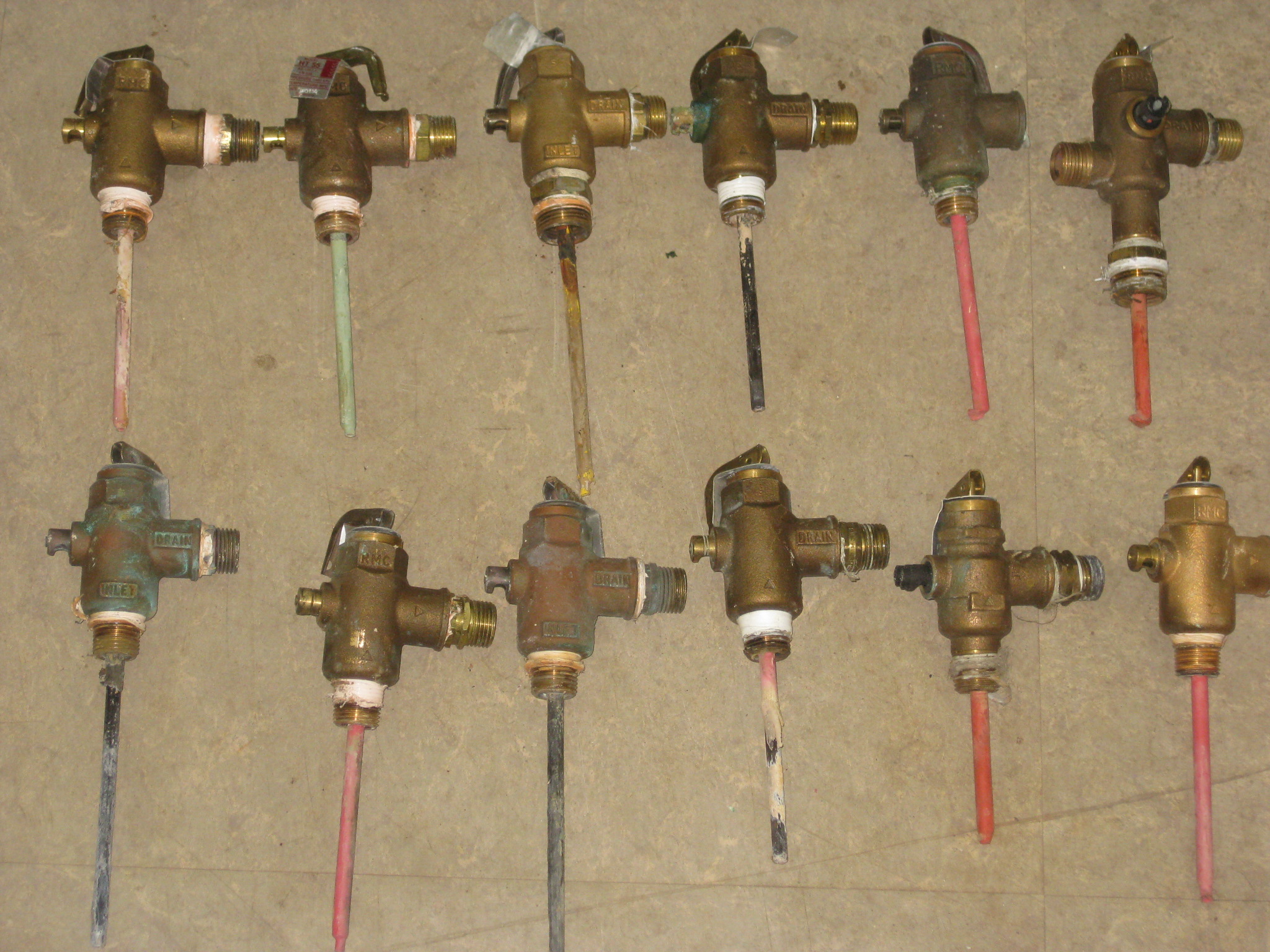
Temperature & Pressure Relief valves. Don’t forget to activate them.
7 easy ways to extend the life of your Water Heater
Have you found yourself in a situation where its winter and you head home for a shower after work, or after a rugby or netball training session, turn on the hot water tap and the water is cold?
There are many plumbing fixtures around your home, the bath or hand basin, kitchen sink, of course the toilet. Some homes, offices and small business have multiple toilets, showers and basins.
As we move into the cooler months the average hot water heater becomes more important for all these plumbing fixtures to work.
Its easy to take these often ignored assets in your home or office for granted, but some simple actions will prolong the life of your storage water heater.
Replacing your hot water heater can usually be unexpected and sometimes expensive, but in today’s fast moving world we can easily ignore this vital cog in our daily routine.
So be sure you are aware of the following:
- Where is your water heater? You need to know where it is!
- Is it gas or electric? You need to know!
- Can you turn off the gas or electricity?
- Can you turn off the water supply to your heater? Try it! Check this valve or tap works
- Is it a mains pressure storage heater or instant (continuous)?
- If it is mains pressure, have you released the Temperature and Pressure Relief valve (T&PR valve)?
- Keep the area around this heater clean and clear. Keep long grass, paint cans etc. well clear.
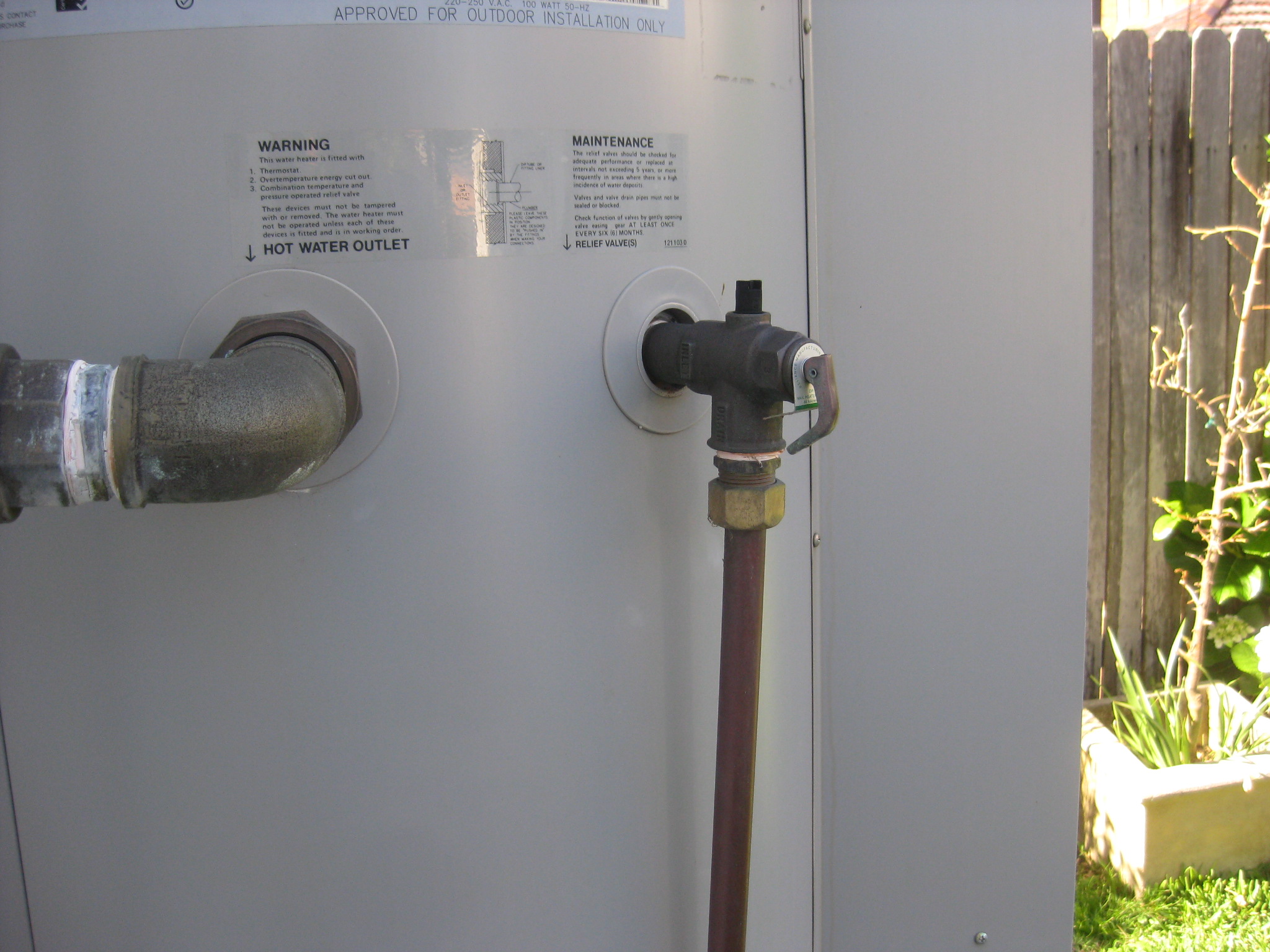
T&PR valve on mains pressure external gas water heater
See the “hook” on the Temperature and Pressure Relief valve, lift it and hold it up for 30 seconds at least every three months. If this is working properly, it will discharge the hot water whilst you hold up the hook, then stop when you let it go. It is normal for it to discharge water while the heater is heating. Then the water should stop! Be careful the hot water doesn’t scald you.
Our water heater is a friend, if you are ever unsure about how your water heater is performing, or have any questions about any of the things we have outlined here, contact a professional plumber for guidance.
Remember to engage a licensed plumber to attend to your hot water heater.
https://www.thelonedrainerandpronto.com.au/hot-water-services.html
Something to aim for….a fly on the wall
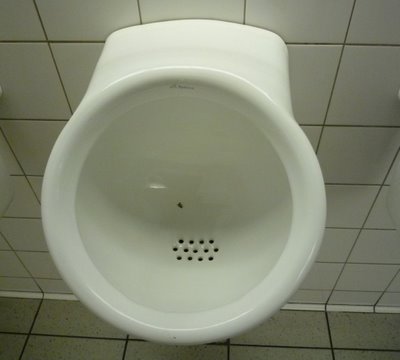
In a previous blog post He aims, he shoots, he scores, I showed you a field goal in a urinal to reduce spillage. Some people were wondering what the original one at Schiphol Airport (http://www.schiphol.nl/) looks like… So once again, courtesy of Exponential Growth Strategist (http://www.ExponentialPrograms.com) Dr Marc Dussault (http://www.MarcDussault.com) here is the infamous fly in the urinal at Schiphol Airport!
This blog is all about having fun with everything having to do with plumbing, plumbing services and plumbing repairs. If you come across anything that you think my readers would enjoy – please send it to me via a comment on this blog. In advance, I thank you for making this a top blog for plumbing aficionados!
Toilet Paper or Bidet?
The Harsh Reality of Using Toilet Paper Rather Than Washing with a Bidet
Having travelled Europe extensively, one gets used to a bidet. Coming back to Australia made some of the queried group bemoan the loss of the bidets they got so used to. The question as to whether or not it was environmentally responsible to throw tissue paper in the toilet or in the trash was raised.
The questioner remarked that they were bothered by how much tissue paper is used by a single family and they wondered just what it takes to remove the paper from sewage lines and from the treatment plants. Some experts were asked this question and they came up with answers to those questions and wonderings. Of course, all the experts came from the plumbing services fields and would know best how to deal with this problem; they gave opinions on what they felt were the best options. We also inquired at several plumbing services and a couple of places that offered a professional plumber.
When attached to a sewer line that is maintained and repaired by a city, the toilet paper is decomposed through the processing system. In order to break down any solid matter that is in the waste water, methane is used. Ways to harness this methane gas is being researched and tested to make this process more efficient. Toilet paper blockages in the sewer lines don’t happen often, but consider the fact that the blockages would be reduced if a bidet were used.
Cleaning one’s self with toilet paper in a home that is hooked to a septic tank can cause all sorts of nasty things to happen inside your house when blockages happen. Plumbing services have to be called in to remove the offending paper, and then any crack in the pipe or seam that is a little rough can gather another huge wad of toilet paper and clog everything up again. This is good news for the plumber; they appreciate the business, but for the home owner, this is a costly repair.
Bidets would do away with the need for toilet paper and end the numerous blockages that are created when someone shoves a huge wad of paper down the toilet.
If you are really lamenting the loss of the bidet, call in the plumbing services and get your bidet installed. Almost any plumber will be more than happy to install a bidet for your home. With a bidet of your own, you will reduce the amount of paper that is used, reducing the amount of trees used in the process.
Giving up the toilet paper is much more sanitary than giving up the bidet. The bidet allows for a cleaner person while not using as many resources.
In the end it was decided that the bidet is the best way to go environmentally, for the best sanitation and for low repair bills.
Don’t Let Tree roots Take Over Sewer pipes!
Today’s post is courtesy of Joe from Woollahra Sydney.
Joe had constant problems with the trees around his Sydney home, and tree roots growing in his sewer pipes, blocking them repeatedly. He would need drain cleaning several times a year to cut the tree roots, as the London Plane trees around his home tightened their vice like grip on his sewer pipes and drains. When this happened, the sewer would overflow in his home and on some occasions the raw sewage would come up in his kitchen sink!
Joe found a way to deal with the tree roots in his sewer pipes, to stop them re-growing and blocking his sewer line.
Now, Joe and his wife Elizabeth, both teachers, travelled to South-east Asia to help those less fortunate and during their travels over summer visited Cambodia and in particular the ancient city of Angkor Wat, built in the early 12th century.

Joe at Angkor Wat Beware of tree roots!
Joe was astonished by the power of these tree roots and how they could almost consume these ancient buildings. He couldn’t wait to share this and other images with us.
Joe says, “Don’t let tree roots take over your drains and sewer pipes!”
What’s Your Poo Telling You? #2
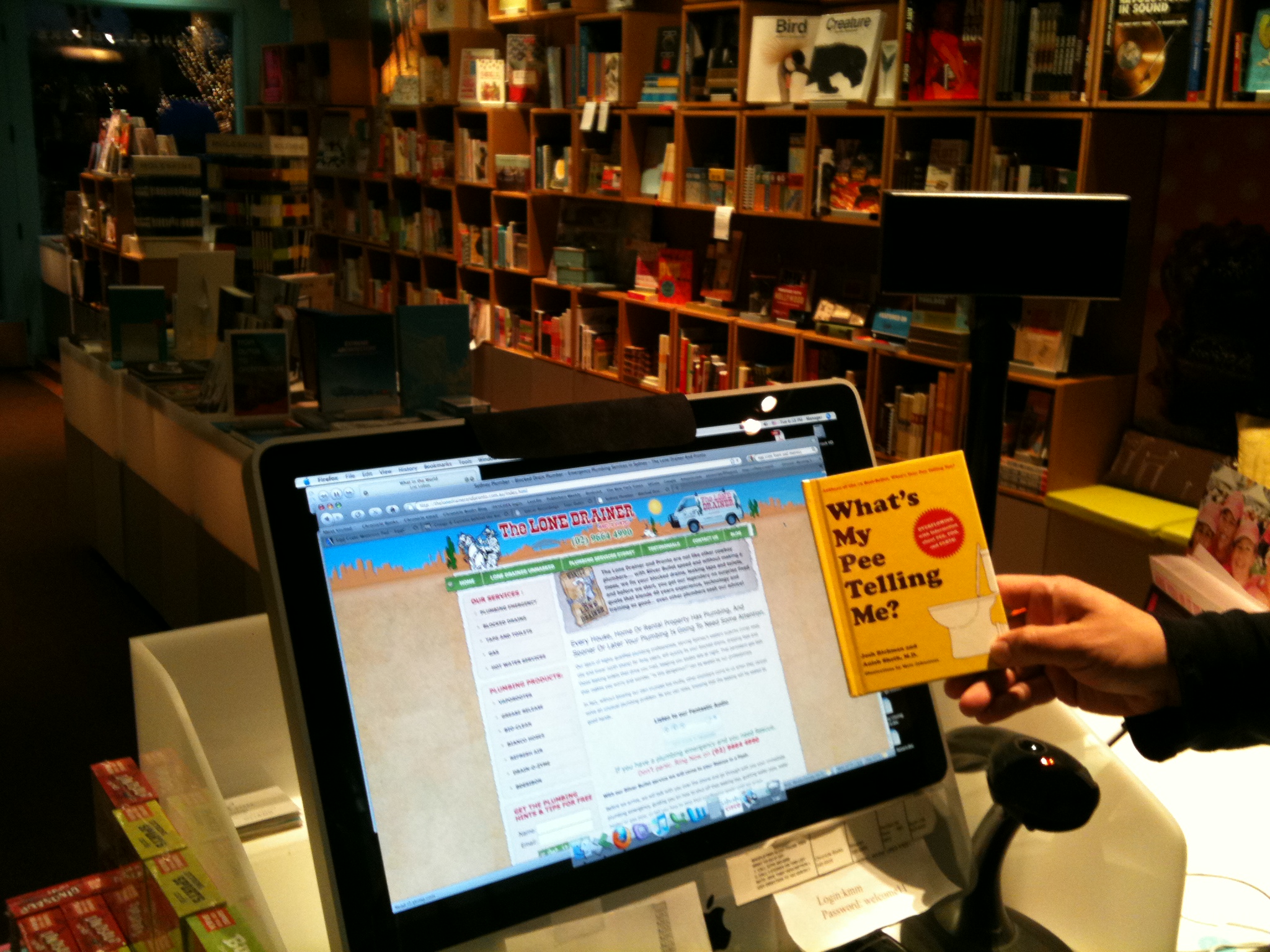
Marc chatted with the sales rep in the store and even brought up our website to show him who was selling the books in Australia!
How cool is that?!?!?

Sydney Plumbers love our drinking water!
The interest over the new Sydney water desalination plant just continues to grow.
After blogging 2 weeks ago about the taste of our drinking water, a topic that is very important to me, we have been contacted by lots of people who also have an interest in our Sydney drinking water. I believe we have here in Sydney Australia, one of the best water supplies in the world and now that we have the Desalination plant, it does secure our drinking future.
Most of our clients have shared with us their thoughts on the flavour of our drinking water, the colour of the water, the taste and smell of the water; and you are all correct.
Just make sure, if you have leaking taps or running toilets, you have them repaired as soon as possible.
Save water where you can and keep drinking water. It makes you feel alive!
How to Prolong the Life of Your Mains Pressure Hot Water Heater
The lifespan of a water heater is about eight to twelve years, depending on whether it is inside or out, near the ocean, or you carry out simple maintenance procedures. Modern tanks are lined with steel, and this lining can break down over time.
Here are some tips to prolong the life of your mains pressure hot water heater.
- Installing a second anode rod prolongs the life of the water heater. The anode rod undergoes corrosion as time moves on and collects this corrosion in order to prevent so much corrosion in the tank.
- A pressurised system needs a Temperature and Pressure Relief valve to be working effectively in order to prolong the life of the water heater. As water heats, it expands and needs somewhere to go. A T&PR valve will prevent stress on the water heater and the hot water plumbing system by taking the discharge.

Ease this valve regularly
- Annual flushing of an older tank will help keep it working and prevent sedimentary build-up inside the tank. Newer tanks are often self-cleaning; they may cost more but are able to last for many years to come.
- Very high water pressure can damage your appliances and cause the water heater to wear out too early. Installing a pressure limiting valve regulates system pressure and reduces the wear and tear on your hot water plumbing and your appliances.
- Scaling is a big problem for water heaters in areas where the public water systems have excess mineral contents. In many instances a water softener is the answer to this problem. The water softener reduces wear and tear on the water system and helps your soap suds up better.
Should your water heater stop working for you, be sure to call in emergency plumbing services and restore the hot water supply back in your house. The Lone Drainer and Pronto plumbing services have an emergency plumbing services number where you can reach a professional plumber twenty four hours a day to take care of any problem you may be having with the plumbing. NEVER attempt to do it yourself as you do require a qualified plumber to assist you in this situation.
Follow the suggestions mentioned and prolong the life of your mains pressure hot water heater. You want the hot water heater in your home or business to perform exactly as it should at all times. By taking care of the water heater and making sure you cover most of these things, you will save yourself the expense of replacing a whole system or the frustration of not knowing just what to do when the whole thing seems to be under performing or even leaking.
It is never nice to have a plumbing emergency, but in the unfortunate circumstance that you do, it is good to know that emergency plumbing services are available. Many reputable companies will come back the next day with a follow up to make sure that everything is working the way it is supposed to, as well as to make sure that there are no more immediate problems that could potentially shut your water off for an extended period of time.
When you have to choose a regular plumber, be sure that they have plumbing services for any emergency and reasonable charges for their plumbing services. They should also give you a price for the job upfront, before they start.
https://www.thelonedrainerandpronto.com.au/hot-water-services.html
Does Your Water Taste Different?
Since the new Sydney Water desalination plant was commissioned January 28th 2010, we have had one of the hottest and yet wettest Sydney summers in recent years.
During this hot spell, we insisted that everyone on our plumbing service team, especially the plumbers out in the field, take water bottles and re-hydrate regularly.
Some of our team believe that the Sydney tap water is “different” since the desalination plant started mixing with our traditional water source.
I had to keep drinking to test the tap water, but, I think the water tastes a little “sweeter”.
Now “portable” water as our water supply is known to plumbing professionals, should be without:
- odour
- colour
- flavour
So we started to ask some of our clients what they thought, and we got different feedback from some of them.
Some, like me, said it is sweeter. Others reported the water was a different colour. Some even believed the new water supply had caused their taps and toilets to leak. Mind you, these comments were received whilst repairing those same leaking taps and leaking and running toilets.
So, is our water supply different? What are you mixing it with? Tell us what you think via the comments box.
As an incentive for the best Sydney Water story, I have 5 exotic Golf club caps to give away, courtesy of Champion Sports.
The US Masters begins next week Thursday April 8th – Sunday April 11th, 2010 in Augusta, Georgia, so post your comments by Friday April 16th, 2010 and the 5 best Water stories will be eligible to win a prize.
Oh and keep drinking water! We recommend it.
Toilet Leaks Waste Water
How Much Water Is Wasted When I Continue To Let My Toilet Leak?
When a meter’s flow indicator moves and you know that all the water outlets are off, both inside and outside, you can be sure that there is a leak somewhere in your lines. The continuous drip of a leaky tap, or a constantly running toilet, will add dollars and cents to your water bill in a hurry. When this happens, it is time to call for toilet plumbing services.
It is estimated that $145.00 is added to your water bill annually if the toilet continues to run after flushing. This is money you are paying out that you don’t have to. The insides of the toilet cistern are inexpensive compared to the extra money you pay because your toilet is constantly running. So it makes sense to acquire plumbing services Sydney to fix your leaky toilet or tap.
The constant running of a toilet not only wastes water but will increase your utility bill over a period of time. That extra money, not to mention the water, could be used more advantageously.
Let’s think about the water that is wasted when you continue to let your taps or toilet leak.
Wasting water is no longer something you can do and not feel guilty about it. The shortages around the world can be helped if everyone keeps their equipment in good working condition, and if we are all mindful about how we use water and how we can prevent wasting water that can be better used somewhere else.
It would not be hard to put together a list of items you could purchase with the money you are paying for the wasted water from the leaky toilet. There are many ways to spend that $145.00. Whether the money is used for a needed item or for leisure, that money can be better spent on something that you will have for a while or something you will enjoy whenever you want to. Therefore, it is well worth it to hire plumbing services to fix your leaky toilet.
So many people can be helped by you simply ensuring that you do not waste water negligently. Neglecting to take care of your household can cost you hundreds of dollars in a short period of time. Lately, the economy makes us spend thriftier; hopefully it also teaches us to be more conservative of the natural resources that are limited worldwide. Contact one of the plumbing services Sydney to make sure you are doing your part to conserve water and put the water where it will do the most good.
Would you use this loo?
I have just returned from Louisville Kentucky where I attended the 30th Annual Pumper and Cleaner Environmental Expo.
This is one of the western world’s greatest collections of experts, gathering to talk about S _ _ T.
How to clean it, clear it, move it, store it, collect it and record it.
Over the next few weeks I will share with you some of the sights and sounds and people that made Louisville 2010 the greatest plumbing expo so far this decade; http://www.pumpershow.com/.
Please come back to this blog page over the next few weeks to see and enjoy some images of Louisville, KY through the eyes of The Lone Drainer and Pronto.
In the meantime enjoy these images of a very unusual public toilet. I ask you, Would you use this Loo?

Now that you’ve seen the outside view, take a look at the view from the inside out.
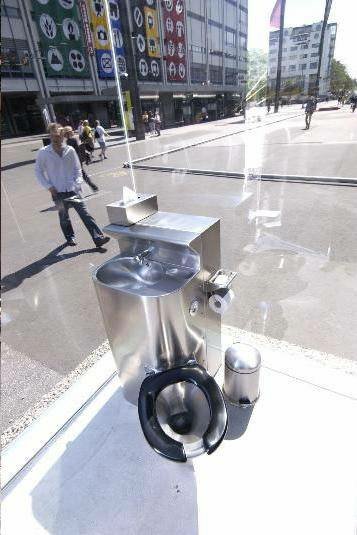
It’s made entirely of one-way glass! No one can see you from the outside, but when you are inside it’s like sitting in a clear glass box!
Could You….??? Now would you use this fun toilet?
Plumbing Sydney – The Advantages Of Quotes From Plumbers
There are Advantages of acquiring Quotes and Upfront Pricing from Tradesmen/Plumbers with Reliable Reputations Before Starting Simple Maintenance Jobs.
Home owners are often faced with the dilemma of trying to fix their plumbing themselves or calling in a professional plumber to get the job done. The advantages of quotes, upfront pricing and a reliable reputation can mean all the difference in the world in the amount you end up having to pay for the work done.
When looking for reputable plumbing services, check with the Better Business Bureau and with the certification board that certifies services for plumbing in Sydney. All the professionals are certified for plumbing Sydney.
Some of the things you should expect when choosing a plumber is convenient scheduling of service technicians along with a notice of their expected time of arrival. You are better able to maintain your schedule when you know what time the service technician is going to be at your door.
You should also expect a service technician to be well groomed and wear clean boots/shoes or protective booties inside your home in order to protect your floors. A complete plumbing system investigation should take place with a provision of price before the job is started. A couple days after the service call is made to your home, there should be a follow up call that checks to make sure everything is working just the way it is supposed to.
On the occasions you need to call in professional plumbing services, make sure you get estimates and a repair plan that specifies that no work will be done without your authorization and you should, if you can, get a second opinion if there is any more work to be done. Having to search for plumbing contractors in Sydney may seem like a daunting task, but if you just follow a few simple steps you can get your work done professionally and have peace of mind knowing you shopped around, and checked out the plumbers credentials.
One of the advantages of having an upfront pricing is that you are better able to budget for the cost of the repairs or new plumbing that may have to be installed. Knowing ahead of time what something is going to cost enables you to ensure that only the work that needs doing will be done, and anything extra will be placed on a separate estimate and quote.
It is understood that at some point in time something in the sewer system and plumbing system is going to go wrong after years of use. Taking care of the maintenance of your home is much easier when you are doing business with certified professional services for plumbing. As you look in the phone book or search engine for “Plumbing Sydney” keep in mind the things that a quote with upfront pricing can do for your budget and your peace of mind. It is always easier when you know what to expect from the plumbing services you are going to get.
Upfront pricing helps prevent “cost over-run” when the plumber seems to continue to find one thing after another wrong and wants to charge for each and every extra procedure. Don’t get ripped off, check credentials, get an upfront quote, and make sure you know exactly what the plumber is going to charge you for.
Problems with hot water during the long hot summer?
Welcome to 2010!
Over the Christmas and New Year period we were called to rescue people with all sorts of plumbing emergencies!
Burst water pipes, blocked sewer drains, leaking taps and toilets are commonplace, but, here at the height of summer, calls for help for running hot water is at an all time high!
Ruptured water heaters or burst water heaters happen all the time and we only think of it as a problem in the winter, but we love a warm shower in the summer just as much.
Try telling a family that we can’t replace their particular type of heater over the holidays, because…………..ahhhhhhhh!
So here are a few simple tips that will assist:
1. Know where your water heater is. You would be surprised how many people don’t know where their water heater is!
2. Know how to turn your water heater off.
3. Try turning your water heater off to check that the cold water valve that turns it off works. One emergency water heater job we went to on Boxing Day, could have saved the owner money if they could have simply turned their heater off at the control valve or tap. The tap would not work, so we had to shut down the entire house, cut out the faulty tap valve and fit a new valve. We then turned the water to the house back on, so our clients at least had cold water to flush the toilet, make a cuppa and have a cold shower until we could track down the appropriate new water heater that was needed.
4. Pull the pressure relief valve on your mains pressure water heater, let it run for 5 or 10 seconds. When you let the valve go the water should slow down and then stop. If it does not stop, try it again. The pressure relief valve should be eased at least every 6 months.
5. Make sure its dry and clean around the base of your water heater storage area. Keep it clear of leaf debris, and long grass if it is outside.
6. Don’t store flammable liquids, petrol or paint anywhere near a gas water heater.
https://www.thelonedrainerandpronto.com.au/hot-water-services.html
I can’t turn my water meter off!
If you have a plumbing emergency, or you have water running all over your house, or a split tap washer, or burst water heater and your water meter won’t turn off, you may be in trouble!
If your meter tap has a tee-head on it, turn it off in a clockwise direction as firmly as you can. Firmly; don’t overdo it.
If your meter tap is missing the tee-head, get a large pair of grips and turn it off in a clockwise direction as firmly as you can. Firmly; don’t overdo it.
Open a garden tap to let out the pressure.
Then call an emergency plumber!
Check out this video below that shows what we do to upgrade your water meter control valve.
Great fun on a hot day!
Before a plumbing emergency arises ensure you know where and how to turn off your cold water supply. It’s incredibly simple if you know where it is.
I want you to have our plumbing Hints and Tips, they are free.
Simply fill in the box on our home page to get our Plumbing Hints and Tips.
I know they will help you in a plumbing emergency!
HELP! I’ve got a burst pipe in my bathroom!
This post is relevant to a Randwick plumbing emergency that happened yesterday.
We had an SOS from a long term client “Joan”.
You could hear the panic in her voice. “Come quickly, we have a burst water pipe under our vanity basin and we can’t turn the water off” screamed Joan.
“Is your floor waste drain clear?” we asked. “Yes” Joan replied!
We told her how to minimise the water damage by shutting the cupboard doors and direct the gushing water towards the floor drain, and then putting a towel across the doorway to keep the water flow in the bathroom.
We were at the house within 15 minutes, and with a large pair of grips, we were able to slow down, but not stop the water flow.
Now, a picture paints a thousand words and this short video will actually take you there.
Please watch and learn.
It’s incredibly simple to figure out where and how to turn off your hot water and cold water supply if you know where they are, and avert any plumbing emergency.
I want you to have our plumbing Hints and Tips, they are free. Simply fill in the box on our home page to get our Plumbing Hints and Tips.
I know they will save you thousands of dollars!
Are you Ready for Spring?
Spring is here and summer is just around the corner! This means footy finals, Spring Racing and cricket! You don’t have to change your sleep habits to watch the games, and you can start planning a good old BBQ with family and friends.
This also means that people will want to get their backyard into shape, and the NSW State Government is helping with this by offering rebates for some water saving devices. More information about this can be found at http://www.environment.nsw.gov.au/rebates/
Here are some simple ways to save water around the house but still keep your garden looking its best during the hot summer:
– Install a timer irrigation system. Drip lines are effective as they deliver water straight to the plant root system and largely avoid water loss through evaporation.
– Use mulch throughout your garden beds to further trim down evaporation.
– Install a trigger nozzle. They save water by shutting off a hose between watering different plants in the garden.
– Install a rainwater tank to capture otherwise wasted rain water that runs off the household roof. The NSW Government provides rebates of up to $1500 for such tanks.
– Think about installing rain and soil sensors which prevent irrigation systems from operating unnecessarily after rainfall.
Also if you are installing a new BBQ, always remember to use a licensed gasfitter!
