
Archives
Women Only. The Turkish Bath Sydney
I, Dave Conroy, The Lone Drainer and Pronto, plumber to the stars of the Eastern suburbs pride myself on running a modern, forward looking business, being proud to be a multicultural Australian and always on the lookout for new ideas, both for plumbing and life.
This week however, by virtue of a visit to the Ottoman Turkish Bath and Day Spa in South Granville, I was privileged to learn something both modern and traditional all at the same time.

And no, it wasn’t the vision of a giant hexagonal white marble bathhouse, with a massive hot spa, surrounded by twenty big white marble wash basins and a huge marble central slab, everything looking like a Renaissance painting, all steam and sexy oriental music. Oh no, it wasn’t even the big marble pedestals where the clients are scrubbed and massaged by dutiful and strong and OK, I’m not shy to say it, attractive female attendants, slathering them in rosewater scented lotions and potions; no, no, no, I didn’t get to see all that, as it’s a women’s only establishment. That was just reported to me by my female colleague who experienced it all. Afterwards she was dopily, dreamily barely able to draw my attention to the DRAINAGE system which was what she thought would interest me.
She was right. Drains are a big deal for plumbers and we get excited when someone does something clever. At the Ottoman Spa, they had managed to combine the most traditional hammam (that’s the Turkish word for bathhouse) architecture with the most modern of drainage systems.
The first hammam was built in 1453 when Sultan Mehmet the Conqueror conquered Istanbul. And its still standing! You can go there if you click here.
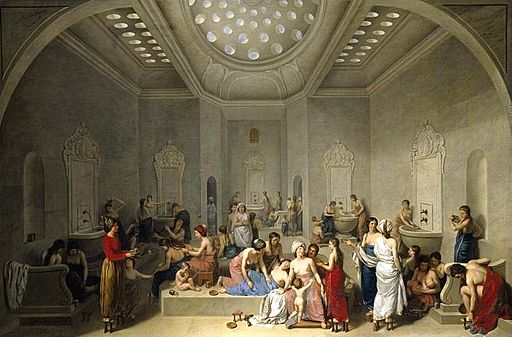
But despite all that classic marble design, the drainage and tiling were super modern and a credit to the tradesmen responsible. It’s not easy to get such vast quantities of water (all that sluicing over all those marble benches) to fall so well and so discreetly over such a vast area.
We’ve come a long way since 1453. And since the invention of the first hollow-pipe drainage by Sir Hugh Dalrymple who died some three hundred years later and yet still gets credited with inventing drainage. Sorry Sultan Mehmet!
That innovation, the new ideas building on the foundation of great old ideas is what I love about plumbing. I got to learn all about hammams today. It’s a great gig.
Dave Conroy. The Lone Drainer.
Thank you Glenys I Love Plumbing.
Cow gets stuck in sewer manhole
During a long career dealing with blocked drains we have seen some unusual things in the sewer, and this is one of them.
This 1:53sec YouTube clip shows a team of Chinese firefighters, police and vets rescue a cow that has fallen down a sewer maintenance hole.
The pregnant cow looks pretty uncomfortable as she is winched out of the manhole. But she ambles off into the night with her grateful owner as if nothing has happened.
Do tree roots grow in PVC pipes?
Do tree roots grow in PVC pipe?
Yes they do!
The PVC pipe shown here in this Youtube clip has tree roots growing in through the wall of the pipe in three different places. There is a significant Norfolk pine tree and a Paperbark tree within two-three metres of the pipe.
The roots were cut from this pipeline about 8 weeks ago.
This survey was taken before applying Vaporooter to the pipe line.
Vaporooter will NOT fix a broken pipe. Vaporooter stops tree roots in drains!
In this case, we are only keeping the roots at bay until the necessary repairs are undertaken.
The Joy of Toilets in Coogee
Exactly 12 months ago today the Mayor of Randwick Noel D’Souza, broke ground on the new Coogee Beach toilet block. I am happy to report that these new facilities were un-officially opened 360 days later on Friday September 1st 2017. The first day of spring.
And it was worth the wait!
The discomfort to beach regulars and the interruption of the foot traffic flow along the upper and lower promenade right in the middle of Coogee beach is a distant memory.
I’ve been watching the evolution of the site and my almost daily hop, skip and jump along the lower prom and the detour around the street level construction zone sensed that this simple toilet block would be another jewel in the Coogee crown. I was right!
The spring weather on Fathers Day saw people out in droves. They were happy to use the new facilities. I had to try ’em for myself. The plumbing is state of the art.
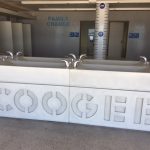 The hand wash facilities at the front of the change room with electronic sensor taps that spit water into the free form basins when they detect your hands in range, compliment the soap dispensers. The showers in this open public area are all push button. I tried one and had my shirt sleeve soaked by the instant arrival of fresh H2O from the water saving shower head.
Mums and Dads will be able to rinse off and have their kids do the same without having to go into the change rooms and toilets dedicated to both sexes.
I didn’t venture into the ladies but the men’s change room is great.
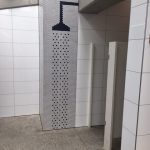 Features include 5 low maintenance stainless steel WCs with concealed water saving cisterns and an easy to maintain urinal about 5 metres long, 5 additional showers and plenty of clothes hooks and seating to get changed before and after swimming. The entire area can be easily washed down and the beautiful polished concrete floor and the brightly tiled walls will help keep the facility sparkling.
During my roaming through the freshly laid turf in the park above, I had wondered about the new concrete seating and the glass panels set into the ground there.

I’m pleased to say they are skylights for the change rooms below. Brilliant!
Well done Randwick City Council.
Poo News
Our readers are still the best source of fun, information, insights and images from the wonderful world of plumbing
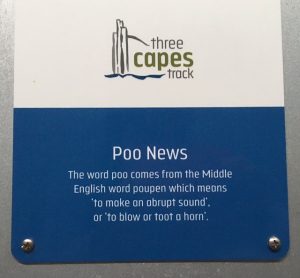
I’ve heard plenty of explanations of the word Poo. I hadn’t heard this one.
Shower outdoors more often
With our hottest summer on record, many of us have been showering outdoors. It’s a perfect opportunity to water the garden and the lawn, stay cool ourselves and save water.
Some clients have us set up a permanent outdoor shower in the garden or near the swimming pool just to rinse off.
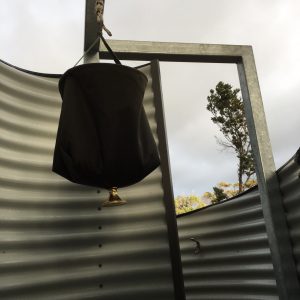
I reckon simple is best. Good old corrugated and canvas.
Our correspondent enjoying the Three Capes Track in beautiful Tasmania, also reports it was 13°C.
A plumbers view – Super Bowl 2016
Sunday, February 7th was Super Bowl 50 Sunday in San Francisco. By now you may know The Denver Broncos beat the Carolina Panthers 24-10 at Levi’s Stadium.
What’s that got to do with plumbing? I hear you ask. Well plenty; according to the Scott Tissue company, the toilet is flushed more during halftime than at any other point during the year. That’s 90 million flushes, using 350 million gallons or 1,323,000,000 litres of water, which is the same amount of water that flows over Niagara Falls in seven minutes.
Now, that is…..a Super Bowl!
I’d like to know how many blocked drains happened on Super Bowl Sunday!

Welcome to Movember – Men’s Health Month
Men’s health is something very close to my heart. Having lost my dad in 2009 to prostate cancer at 73 is something that changed the way I look at my own health and health checks.
Over this month Movember I plan to share the personal stories of plumbing colleagues, clients and work mates. They’re all just normal men who felt a slight change in their bodies and had the courage and the good sense or friendly push to go and get things checked out.
I’ve got some simple health tips that work for me and if they work for me, then, they’ll work for you too! I’ve got some great summer recipes.
So, I can hear you asking…. What the hell has men’s health got to do with plumbing? Well it has everything to do with plumbing. Our bodies are temples, our home is our castle and our pipes within our temple and our castles need to function properly or we are “up shit creek”!
I’ve got some YouTube clips to share; some funny, some educational, some frightening!
Get your pipes checked…. I did!
November is Men’s Health Month and my reminder came in the mail:
“It’s time to get your pipes checked again,” said the friendly letter from my Colorectal surgeon. It spelled out the process; the fasting, the preparation, the costs, the procedure on the day, what to expect afterwards, the discomfort but most of all…….. the benefit!
So on Sunday, I began the preparation for a colonoscopy on Monday. After a healthy and hearty breakfast on Sunday morning, it was a time of fasting. No food! Then, from early afternoon into the evening I had to take not 1, not 2, but 3 doses of fairly unpleasant medicine that would clean my internal pipes so the surgeon could put his camera through them.
Now all this makes sense to a 54 year old male and father of 3 healthy and happy sons, whose father after being diagnosed with Prostate cancer passed away a few years ago.
So, I hear you ask, why is your plumber telling you this? If your body is a temple and mine is, and your home is your castle then it’s appropriate to get your pipes checked, especially if your castle has a history of problems or blockages in your sewer pipes.
There are many parallels between a Colonoscopy and a Drainoscopy.
To get a Drainoscopy is easy!
We clear your pipes and then put a specialized drain camera through the pipes to find out what is actually going on in there. Then we take the vision and put it on our YouTube channel with a description of what is going on in the pipes. You can see it, you can share it, you can get a second opinion, you can evaluate the information and understand exactly what is going on underground or in your pipes.
Yes, it is a little uncomfortable. But now I know that after Dr “L” has treated 2 areas of interest and checked my prostate, my pipes are in good condition. I’ve seen the pictures. And at the appropriate time, he will send me a reminder for my next Drainoscopy er… Colonoscopy.
So to end on a high note watch this fun YouTube clip.
Flush with Facts #3 Thomas Crapper
Thomas Crapper was a plumber in the second half of the 19th and early 20th centuries who founded his own company in Chelsea, London in 1861.
Contrary to popular belief, Crapper did not invent the flushing toilet; that is said to have been invented by Sir John Harrington. Crapper however did make several patents relating to drain improvements, water closets and manhole covers. His plumbing business was quite successful, and supplied plumbing to members of the royal family, a feat for which many incorrectly believed he was knighted.
Although he did not invent the flushing toilet, Thomas Crapper & Co did successfully market and mass produce them. As soldiers passed throughout England during WWI it is believed that the slang term “crapper” was created due to the Crapper & Co’s logo being displayed everywhere.

A plumbing emergency and ducks we’ve rescued
We were called out to this plumbing emergency that brought an unexpected surprise.
Our client had a blocked drain and when we had just about completed that repair, cutting tree roots from her sewer pipes, she called out because she needed a hand in her back yard.
A mother duck that had been nesting in her dense rear garden had chosen today to take her babies for their first swimming lesson. The ducklings took to the water like ….. well, ducks to water. The only problem was that the water level in the pool was a little low, they couldn’t get out of the pool and they were getting very tired.
Our attempts to rescue them by hand and with the pool scoop, brought a tirade of squawking and flapping of wings from the mother duck. She didn’t want us anywhere near her babies! We found a plank in the back shed which we put in the pool and then draped an old towel along the length of the plank, then stood back.
When mother duck settled down she could see we were trying to help, she led the baby ducklings up the plank and after checking they were all out, she herded them back to the nest in the dense undergrowth.
She gave us another flurry of feathers when we tried to check on the babies.
Every day brings another adventure!

My car is powered by sewage
Methane powered beetle
This post was brought to my attention by the ever vigilant Richard Piper. When you ring our office for help you may speak to him. Tell him you enjoyed this post; I did!
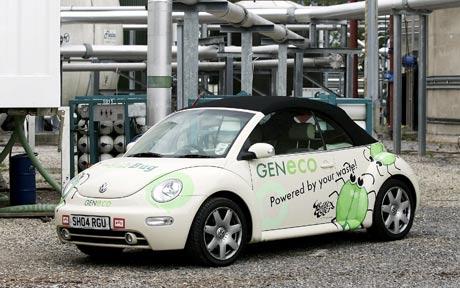
Sewage powered VW Beetle hits the road in Bristol! A Volkswagen Beetle powered by gas from sewage has taken to the road for the first time in Britain.
This converted Beetle car runs on methane gas. The Bio-Bug was launched on Thursday by Wessex Water, which is generating methane from human waste at a sewage treatment works near Bristol.
The company claims the prototype is able to cover 10,000 miles annually on the waste from 70 households.
If the trial proves successful, Volkswagen will consider converting some of its fleet of vehicles to run on biogas.
Mohammed Saddiq, of GENeco, a Wessex Water subsidiary which runs the biogas plant at Avonmouth, said: “Our site has been producing biogas for many years, which we use to generate electricity to power the site and export to the National Grid. With the surplus gas we had available we wanted to put it to good use in a sustainable and efficient way. We decided to power a vehicle on the gas, offering a sustainable alternative to using fossil fuels which we so heavily rely on in the UK.
“If you were to drive the car you wouldn’t know it was powered by biogas as it performs just like any conventional car. It is probably the most sustainable car around.”
The Anaerobic Digestion and Biogas Association said the launch of the Bio-Bug proved that biomethane from sewage sludge could be used as an alternative fuel for vehicles.
Lord Rupert Redesdale, the association’s chairman, said: “This is a very exciting and forward-thinking project demonstrating the myriad benefits of anaerobic digestion (releasing energy from waste). Biomethane cars could be just as important as electric cars.”
Last month Volkswagen announced plans to conquer the green market with a new generation of hybrid and electric cars.
Antonio Gaudi water conservationist
Barcelona 2010
To visit Park Guell and see the home and creative brilliance of Antonio Gaudi is a special treat.
Gaudi created Park Guell for the citizens of Barcelona. It has gardens and homes with a view of the city and the Plaza.
The Plaza is a meeting place for the people of the city and the brightly coloured mosaic seating around the manmade plaza had a secondary purpose. The dry Mediterranean weather usually meant excess water used on something as soothing as a fountain for the citizens and visitors to the city was a waste of water. That didn’t phase Gaudi.
The water catchment created by the Plaza was a brilliant idea to collect any rainwater that fell, and through an underground filter and the storage system, the rainwater was then piped to the mouth of a Mosaic dragon lying in a garden with a fish and lily pond at the bottom of the beautiful staircase.
The ergonomic design of the seating around the Plaza, which was beautifully decorated in mosaics, was incredibly comfortable to sit back, relax and talk with friends and family.
Gaudi’s design allowed any water from those brief showers to fall to the back of the seating and then get channelled off quickly into a gutter on the outside of the seating and then dispersed to the dry garden areas below through a series of “spitters” hand carved in stone.
Absolutely Beautiful!

Park Guell Lion

Rain lions

A place for inspiration and relief
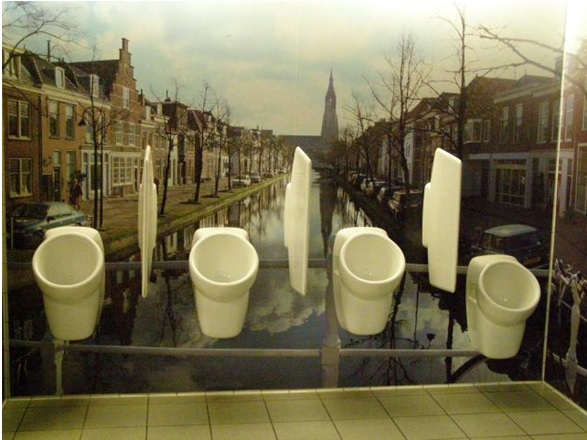
In previous blog posts on urinals and toilets, I showed you a field goal in a urinal that helped to reduce spillage, and also the infamous ‘fly in the urinal’ at Schiphol Airport. So once again, courtesy of Exponential Growth Strategist (http://www.ExponentialPrograms.com) Dr Marc Dussault (http://www.MarcDussault.com) here is another photo, this time of an unknown location in Amsterdam. This is just another example of how we can all take life a little less seriously and enjoy ourselves a little more.
A place for reflection
The next time you come across an interesting bathroom or other plumbing related installation, please take a picture and forward it to me – this blog is a collaborative effort from people travelling all over the world to bring you a mosaic of photos, articles and facts that are curious, intriguing and fun.
Draining the “Coffee makers lane”
Our Venetian correspondent is at it again!
As you have seen in previous posts, Holy S – – T ! A Gondoliers impression and The latest sewer notes and history of Venice, Gio, the Venetian Gondolier, knows how much our readers love to see how waste water and sewer is moved around Venice.
Hey mate!
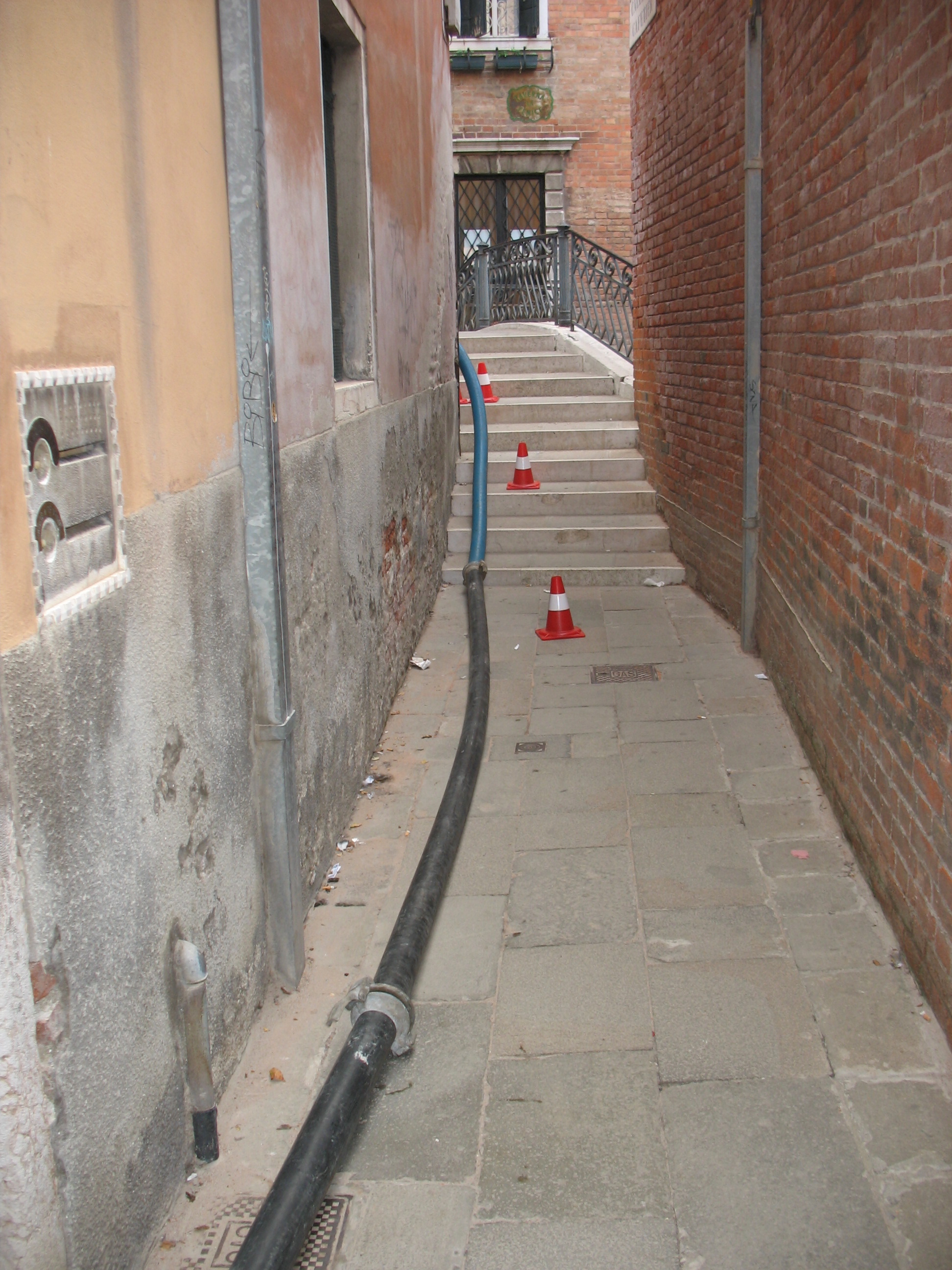
I’m so proud to be on the site that I decided to send you more stuff about Venice. Here is first of all a picture of my lane ” calle del Caffettier” ( the coffee maker lane) while a draining is on the go.
As you see on the first pic our local plumber has the drain hose on the left side of the lane with all the pipe going over the bridge.
Venice pumping waste
Then you see how the pipe goes to the drain boat in the canal where it empties into a tank to be taken for treatment.
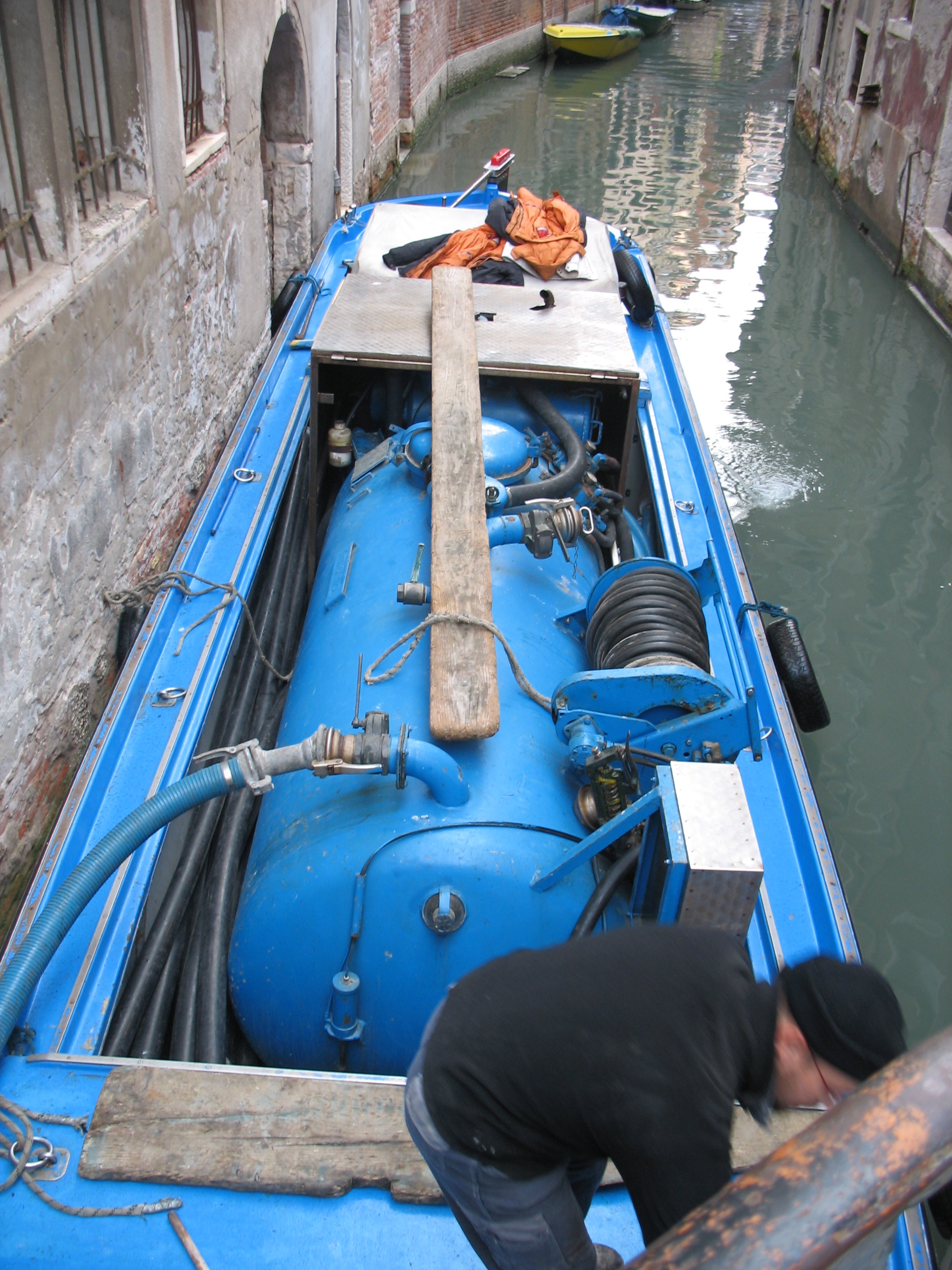
Venetian drain boat collecting waste
Then a picture of our proud fire patrol just after the draining of a boat that sunk because the owner did not drain the rain out…. shame!
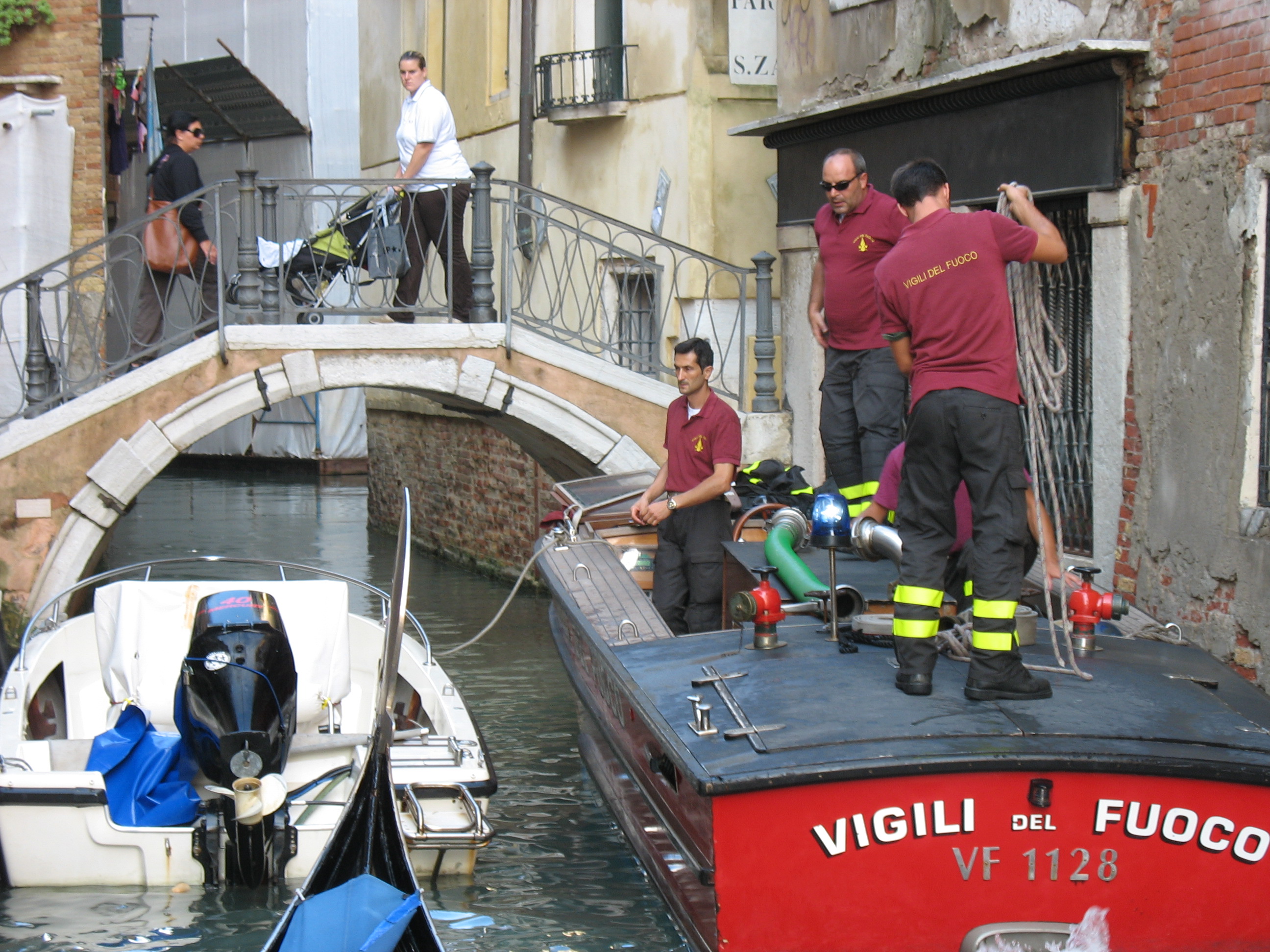
Venice fire team to the rescue
That is all my friend.
See the statue of our Lady on the top of the wall near my house? Isn’t it a corner of paradise?
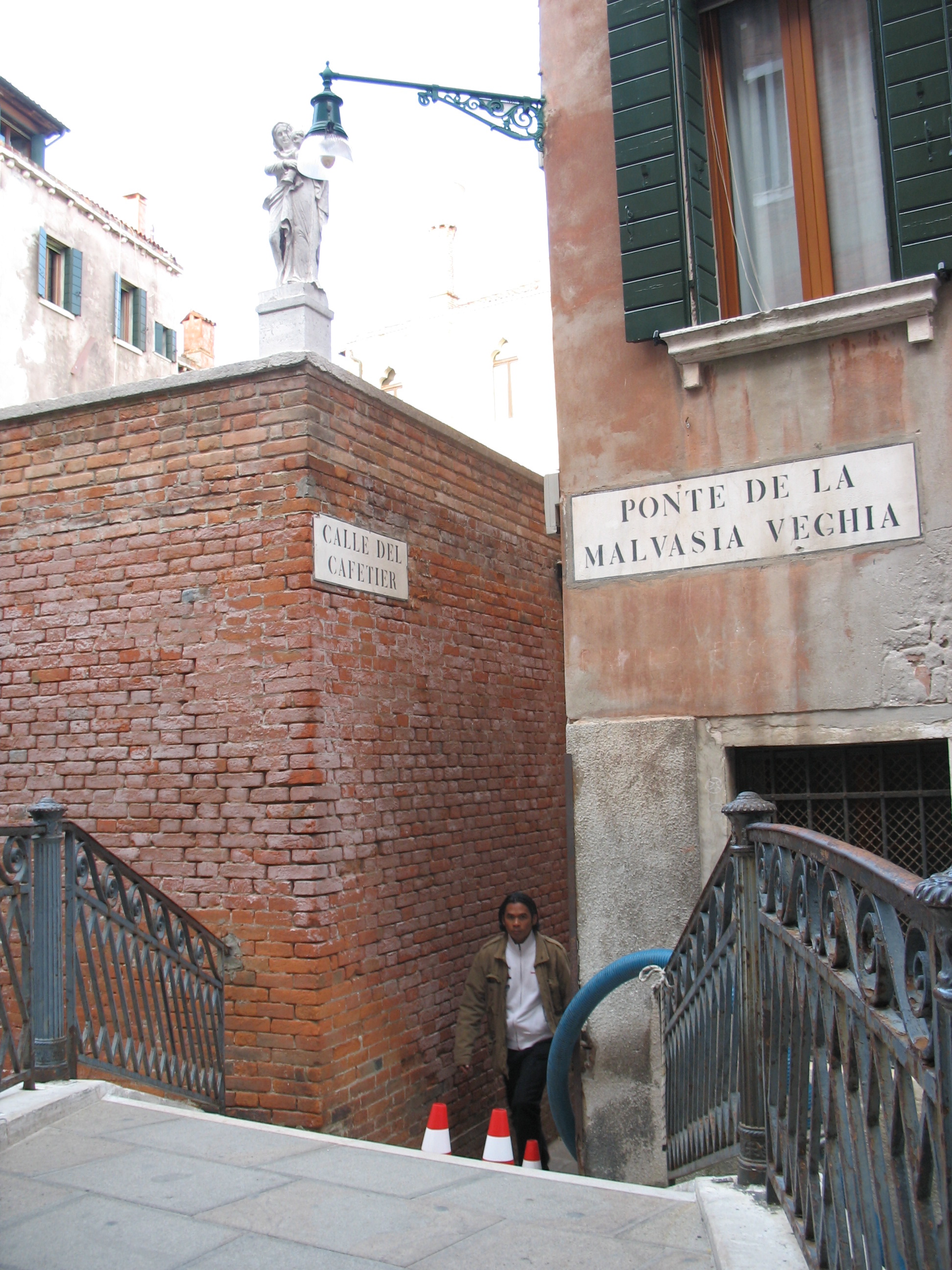
A special piece of Venice
Yes it is Gio. Thanks for sharing it with us!
More from Venice 2
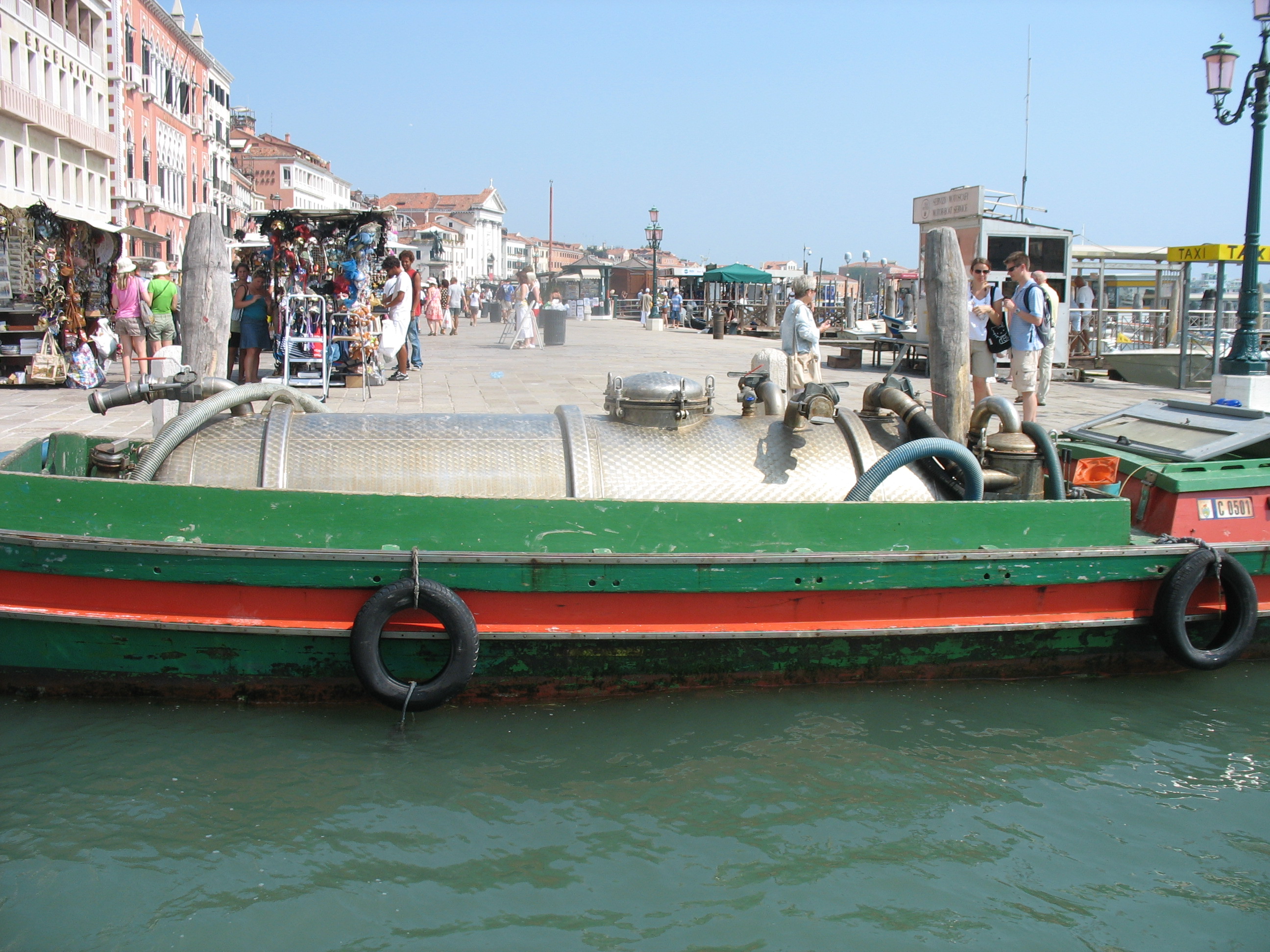
St Marco drain boat
Now Giovanni knows his way around the lagoon and the Grand Canal and all the other canals of the beautiful city of Venice.
His impressions of the sewers and sights of Venice along with his images of the way sewer is transported from the grand homes and palaces along the canals is always educational.
Apart from being a wonderful host and waterman, this excerpt from a recent correspondence underlines just how well our correspondent in Venice knows his way around his water bound city.
Hey Dave!
So can you imagine that Sophie the daughter of a friend from Evans Head, came to visit me in Venice?
Yesterday we had a great evening and this morning I had to wake up early ‘cause I had a commitment with a Norwegian novelist. He is writing a novel about somebody escaping from an island in the lagoon of Venice with a gondola, so he had to check out if it was possible for somebody to do it without knowing anything about a gondola before the moment of the escape.
I took him out on my gondola this morning at 8 for some research and now I’m back. I took these pics on the trip.

Gondolier at rest
So dear readers, this gondolier knows his S – – T.
Please enjoy some more images of Venice courtesy of Gio.
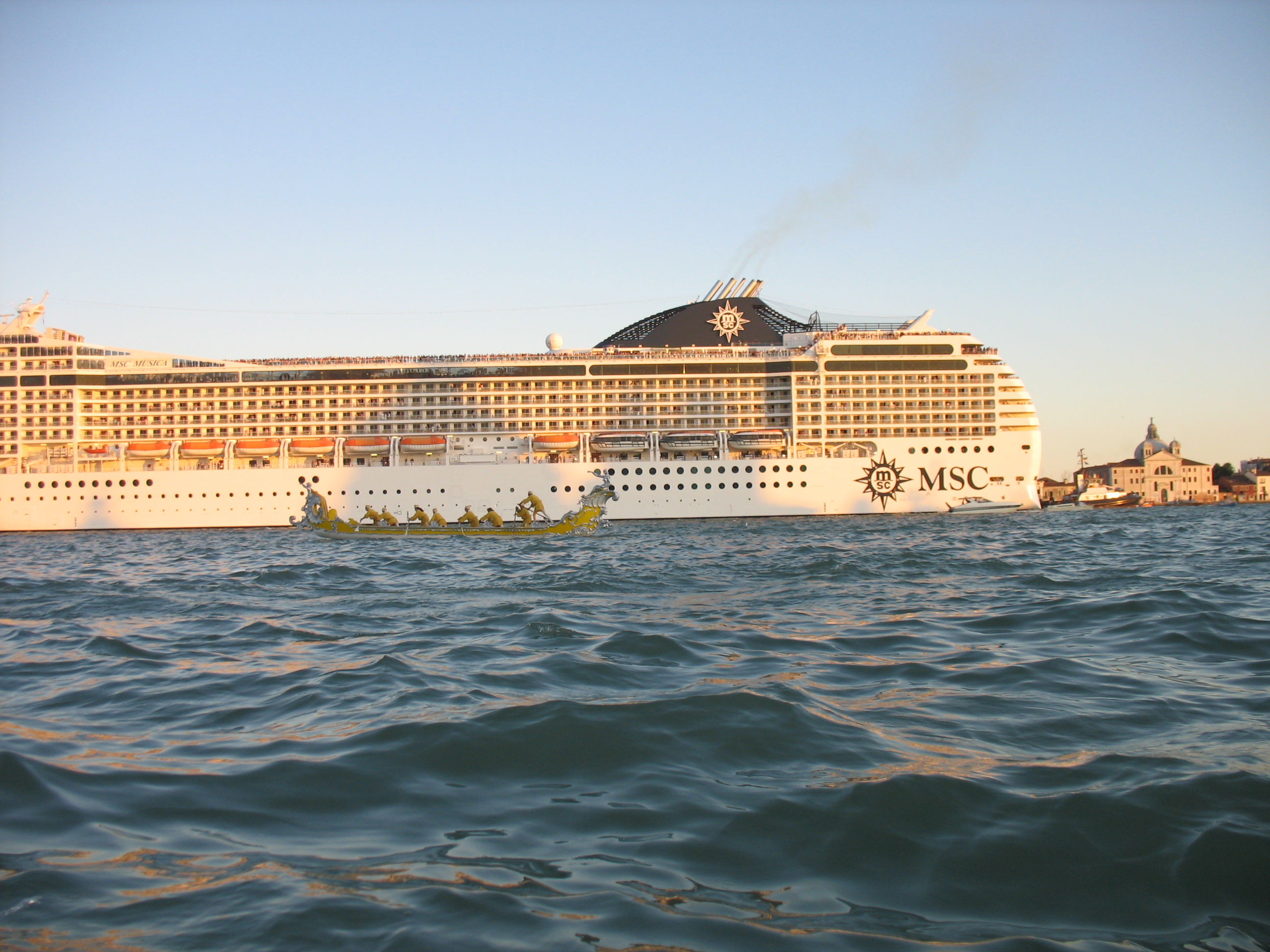
Cruise ship at anchor Venice
The latest sewer notes and history of Venice
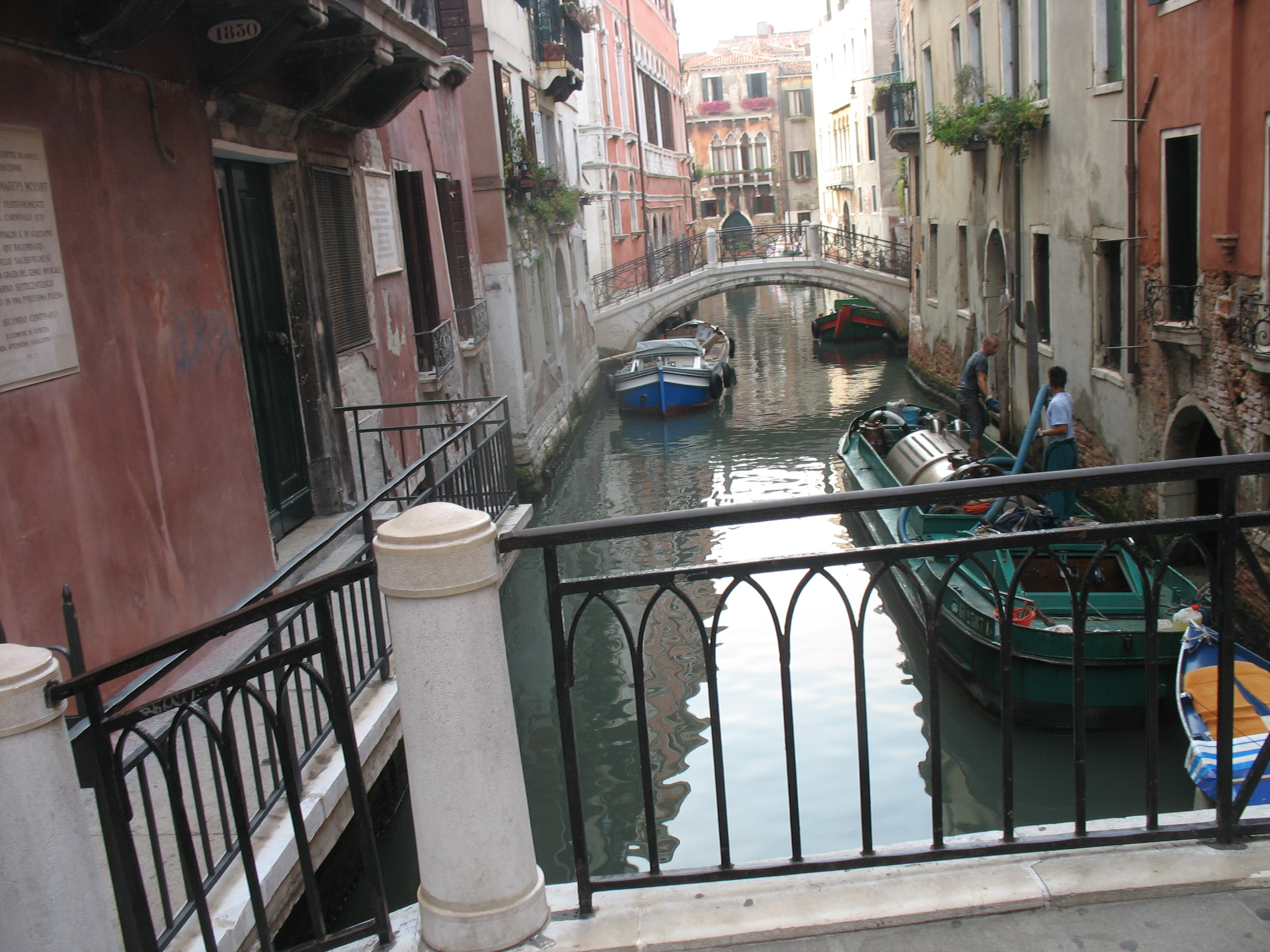
Mozarts neighbours get the drains cleared
More S – – T from Venice! The best part about this blog is sharing with so many people and getting your insights into my topic, S – – T.
Our knowledge of the sewers of the world grows.
Basically, we all use our toilets regularly and if you are not, then seek medical advice. Now I’m not going to get into anything unsavoury in this post, but I have a few toilet jokes and stories lined up for you in the future. So stay regular!
Our regular readers would have read about the world famous Venetian Gondolier my friend Giovanni Giudice in earlier blog posts like Holy S – – T. A Gondoliers impression.
Here in Australia, as we drift into the cooler months it’s spring in Venice and Gio has been keeping me up to date with some interesting facts about the sewer movements and the history of his home town.
Here is an excerpt from a recent communiqué:
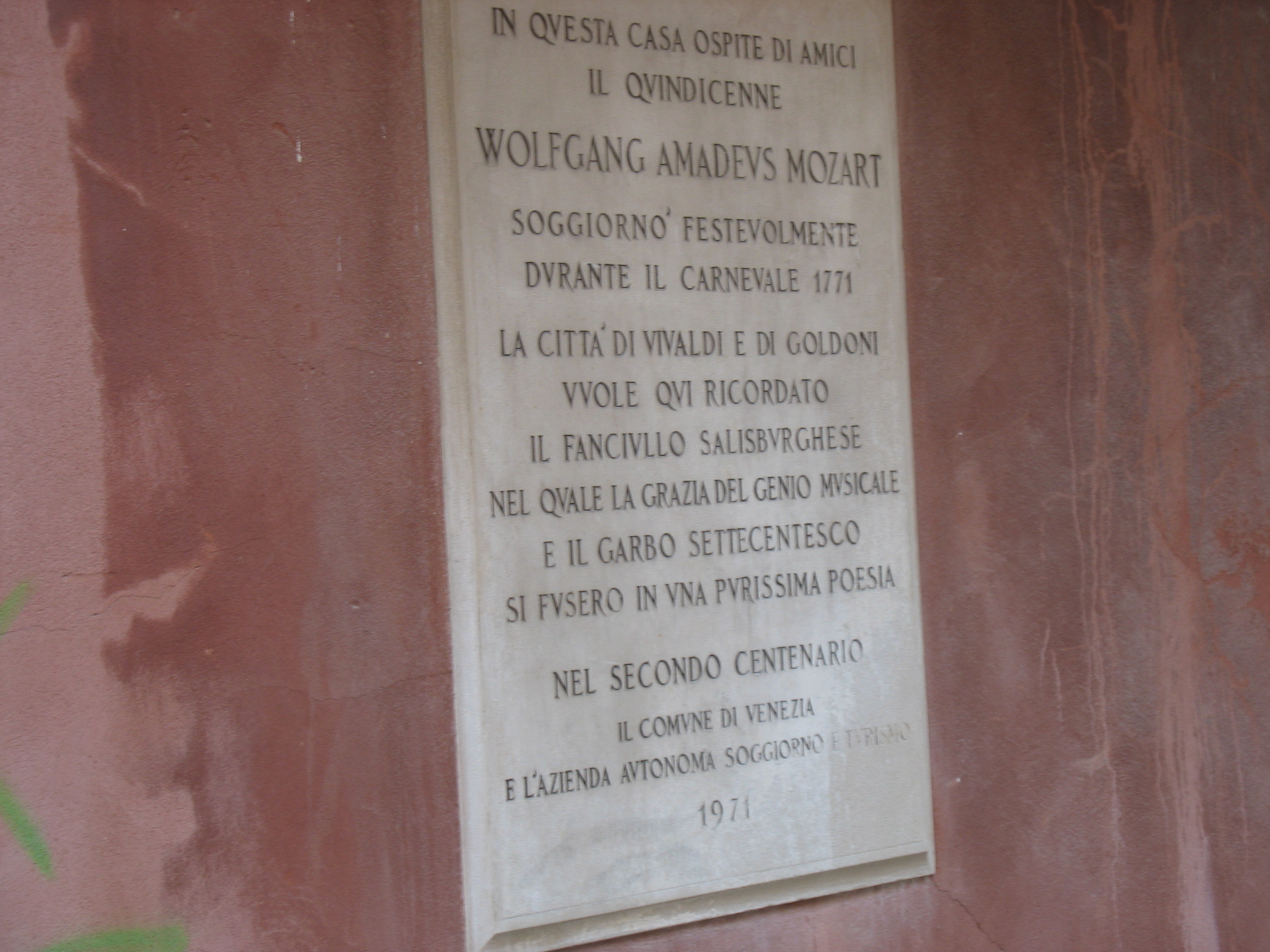
Mozart slept here!
Yesterday I took these pics of drain boats in the first one you can see how they get the pipes to the house. This house is just in front of the house where Mozart, Wolfang Amadeus Mozart, stayed when he came to Venice in the Carnival of 1771.
This is written on the marble white stuff you see. Probably there is still some Mozart S- -T!!
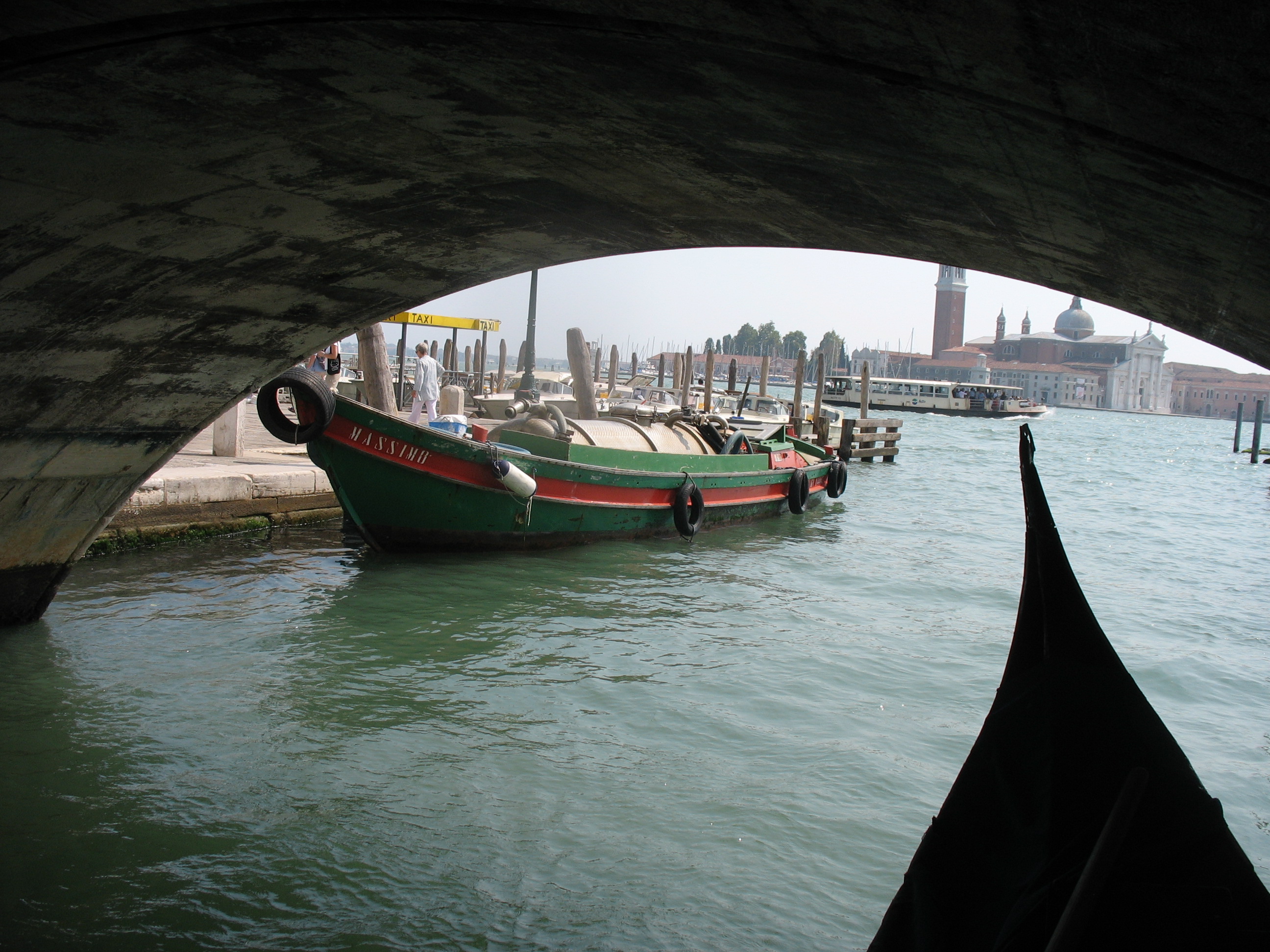
Drain boat at St Marco square
This pic is of another Drain boat in front of San Marco Square. As you see from the last picture, I have taken all these pics from my gondola. You can see I’m under the bridge and you see the back (stern) of my lady, my gondola.
Take care my friend,
Giovanni
If you are travelling to Venice and need a guide, look for Giovanni, he is the best!
Something to aim for….a fly on the wall
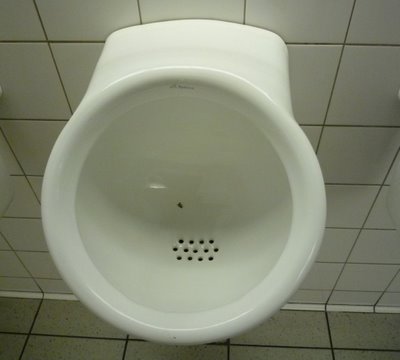
In a previous blog post He aims, he shoots, he scores, I showed you a field goal in a urinal to reduce spillage. Some people were wondering what the original one at Schiphol Airport (http://www.schiphol.nl/) looks like… So once again, courtesy of Exponential Growth Strategist (http://www.ExponentialPrograms.com) Dr Marc Dussault (http://www.MarcDussault.com) here is the infamous fly in the urinal at Schiphol Airport!
This blog is all about having fun with everything having to do with plumbing, plumbing services and plumbing repairs. If you come across anything that you think my readers would enjoy – please send it to me via a comment on this blog. In advance, I thank you for making this a top blog for plumbing aficionados!
Trumpets and toilets
The 2010 Pumper and Cleaner Environmental Expo held in Louisville Kentucky February 24th-27th 2010
We went to Louisville to see how the best of the best plumbers in the United States, look after their clients. If you have blocked sewer drains, blocked sewer pipes caused by tree roots in your pipes, or tree roots in your drains, or overflowing toilets, the experts we met at Pumper Cleaner 2010 know how to fix your problem.
As the name of the show suggests, the focus is on pumping and cleaning up on that other topic very close to my heart, sewerage, that’s right S – – T; because in our game S – – T happens.
Our short YouTube video shows some of the equipment on display and how it is used.
Enjoy the trip!
Music by Chuck Mangione, “Give it all You’ve Got”
Don’t Let Tree roots Take Over Sewer pipes!
Today’s post is courtesy of Joe from Woollahra Sydney.
Joe had constant problems with the trees around his Sydney home, and tree roots growing in his sewer pipes, blocking them repeatedly. He would need drain cleaning several times a year to cut the tree roots, as the London Plane trees around his home tightened their vice like grip on his sewer pipes and drains. When this happened, the sewer would overflow in his home and on some occasions the raw sewage would come up in his kitchen sink!
Joe found a way to deal with the tree roots in his sewer pipes, to stop them re-growing and blocking his sewer line.
Now, Joe and his wife Elizabeth, both teachers, travelled to South-east Asia to help those less fortunate and during their travels over summer visited Cambodia and in particular the ancient city of Angkor Wat, built in the early 12th century.

Joe at Angkor Wat Beware of tree roots!
Joe was astonished by the power of these tree roots and how they could almost consume these ancient buildings. He couldn’t wait to share this and other images with us.
Joe says, “Don’t let tree roots take over your drains and sewer pipes!”
What’s Your Poo Telling You? #2
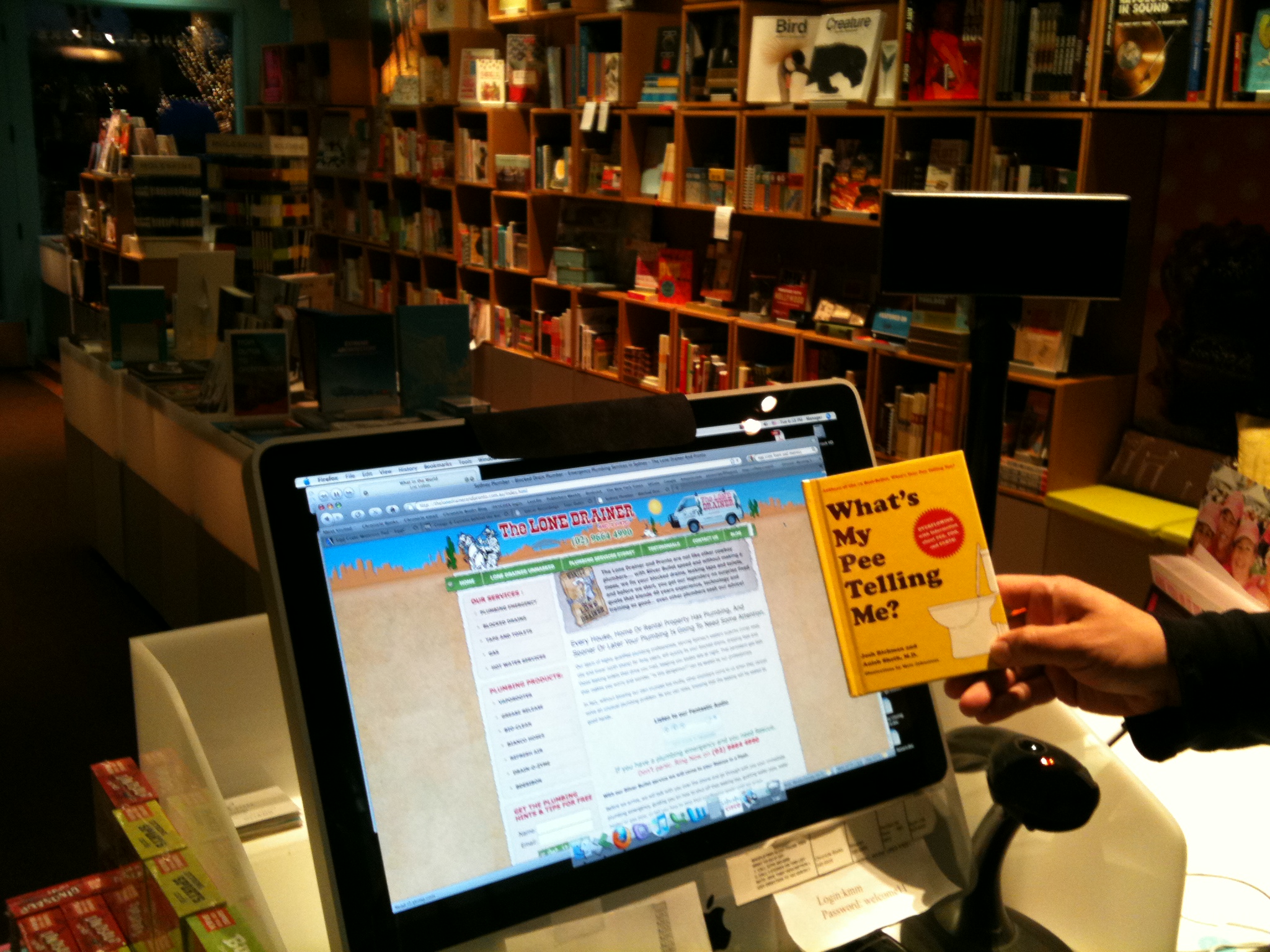
Marc chatted with the sales rep in the store and even brought up our website to show him who was selling the books in Australia!
How cool is that?!?!?

He aims, he shoots, he scores!
Today’s blog post is from Exponential Growth Strategist (http://www.ExponentialPrograms.com) Dr Marc Dussault (http://www.MarcDussault.com) who tells me that Schiphol Airport in Amsterdam setup a test with a fly printed at the bottom of the men’s urinals to ‘reduce’ spillage. From memory, the reduction was astonishing, 75%+ reduction. The reason it seems is that given a target, men can actually aim quite well…
Marc came across this version of the same principle in his native Montreal, Quebec at a local sports restaurant called La Cage Aux Sports (http://www.cage.ca/pointe-claire)…

La Cage Aux Sports Urinal
Schiphol Airport Urinal
Let’s face it – spillage or no spillage – this just looks like a lot of fun doesn’t it?
Psst! If you look closely at the floor – there’s no spillage!!!
Would you use this loo?
I have just returned from Louisville Kentucky where I attended the 30th Annual Pumper and Cleaner Environmental Expo.
This is one of the western world’s greatest collections of experts, gathering to talk about S _ _ T.
How to clean it, clear it, move it, store it, collect it and record it.
Over the next few weeks I will share with you some of the sights and sounds and people that made Louisville 2010 the greatest plumbing expo so far this decade; http://www.pumpershow.com/.
Please come back to this blog page over the next few weeks to see and enjoy some images of Louisville, KY through the eyes of The Lone Drainer and Pronto.
In the meantime enjoy these images of a very unusual public toilet. I ask you, Would you use this Loo?
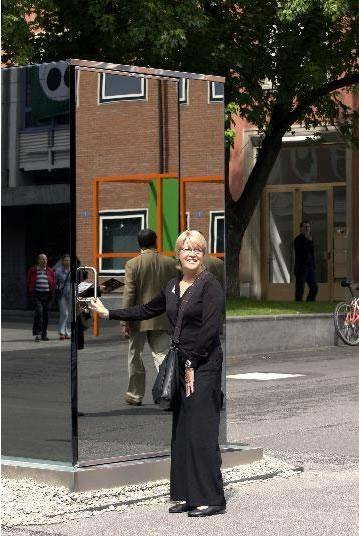
Now that you’ve seen the outside view, take a look at the view from the inside out.
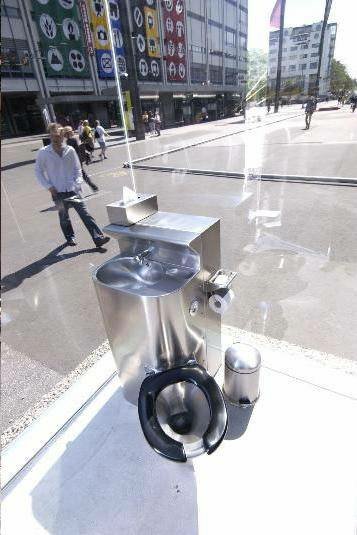
It’s made entirely of one-way glass! No one can see you from the outside, but when you are inside it’s like sitting in a clear glass box!
Could You….??? Now would you use this fun toilet?
I can’t turn my water meter off!
If you have a plumbing emergency, or you have water running all over your house, or a split tap washer, or burst water heater and your water meter won’t turn off, you may be in trouble!
If your meter tap has a tee-head on it, turn it off in a clockwise direction as firmly as you can. Firmly; don’t overdo it.
If your meter tap is missing the tee-head, get a large pair of grips and turn it off in a clockwise direction as firmly as you can. Firmly; don’t overdo it.
Open a garden tap to let out the pressure.
Then call an emergency plumber!
Check out this video below that shows what we do to upgrade your water meter control valve.
Great fun on a hot day!
Before a plumbing emergency arises ensure you know where and how to turn off your cold water supply. It’s incredibly simple if you know where it is.
I want you to have our plumbing Hints and Tips, they are free.
Simply fill in the box on our home page to get our Plumbing Hints and Tips.
I know they will help you in a plumbing emergency!
What’s that smell? A pig of a gas leak
As licensed gasfitters, we have electronic equipment that detects gas leaks from all sorts of gas appliances, gas pipelines and gas meters, but this one is unusual….
A big pig with flatulence sparked a “gas emergency” near the Victorian city of Bendigo last week when the smell wafting from a 120kg oinker sparked fears of a potentially dangerous gas leak.
Two CFA tankers and a dozen firefighters responded to a nightime callout to search for the source of the suspected gas leak on a rural property at Axedale, east of Bendigo.
The ever alert firemen soon sniffed out the source; a pet sow startled from her snooze. “She got very excited and she squealed and farted and squealed and farted” said Fire Chief Peter Harkins.
Chief Harkins said the family who owned the pig had done the right thing by reporting a suspected gas leak.