
Archives
Plumbers love your pets
Your Dog and Dealing with Internal Renovations
Dogs and cats find renovations very stressful: there are strangers in their home changing things, moving things around and disrupting their routine. Some of the risks involved range from escape behaviour, bad dog behaviour, territorial behaviour and the general stress of strangers and loud noises in their space. You also have the risk of injury or the potential of your fur baby being exposed to toxins. Unlike the tradesman, there are no protective masks or clothing for your pet.
Lead and Asbestos, as most of us know, are bad for us, but it’s just as bad for our pets. Years ago it was common for house paint to contain high levels of Lead in addition to Asbestos in our walls. Startlingly before 1970 most paints contained up to 50% lead. Disturbing the paint during renovations can be risky business and you need to ensure you keep yours, and your pet’s, exposure levels down and leave this sort of job to the experts!
Lead and Asbestos will only resurface if it is disturbed; your tradie could unintentionally do this and create a risk. If you’re renovating be sure to follow these simple steps to make sure your family and pets are safe from Lead and Asbestos.
Step 1 – Look into how much asbestos you will have to work around and whether your paint contains lead. The most likely places to find lead paint will be on the kitchen and bathroom cupboards, window frames, skirting boards, doors, architraves, picture rails, exterior walls, gutters, metal surfaces and fascias.
Step 2 – Use the appropriate tools and equipment for the task at hand. Protective clothing is a must! A respirator, disposable coveralls, disposable overshoes, a hat, and gloves will protect you from any dust containing lead. Find somewhere to keep your pets safe while the renovations are happening, a relative, friend or a doggy daycare is always a good idea to get the pets out of the house.
Step 3 – Prepare fully for interior or exterior work. Get experts to deal with Asbestos as there is a multitude of legislation governing the tampering and removal of Asbestos.
Step 4 – Deal appropriately with paint containing Lead. Use techniques that minimise the creation and dispersion of dust or fumes. Large portions of dust or wastewater that contain lead can contaminate the house and garden so it is best not to dry sand or use abrasive blasting. It’s always safer to avoid creating the dust as opposed to cleaning it up after as dust containing only 1% lead can be harmful.
Step 5 – Use a 3 bucket wet cleaning method to eliminate any left over chemicals.
Step 6 – Dispose of contaminated waste appropriately.
This Blog Post was kindly supplied by the Friendly Team at Paddington Pups, Queensland’s Number #1 Doggy Daycare Centre.
Plumbers and dogs
Can Your Dog and the Tradies Play Nice?
Renovations and refurbishing is a hectic and stressful time for anyone involved, but what about the family pooch. Are you having concerns with your dog getting under feet, barking at the strange men in his house or stealing tools?
This is a common problem. Just like us, your dog can get very stressed about having work done in his home. Any behaviour associated with this stress can be a safety risk for not only your dog but also the tradies. As far as your dog is concerned, the tradies are strangers who have come into their home and have started changing things! In addition to this stress there is also the risk of your dog escaping from the yard, as the loud noises of building can also cause significant fear and stress, not to mention the potential for injury, or being exposed to toxins. Unlike the tradesman, there are no protective masks or clothing for your dog.
The best and safest way to deal with this tense situation is to relocate your dog while any work is being done. If it’s a day to day thing then a Doggy Daycare may be just what you need! You can drop off your pooch in the morning before work and easily collect him or her at the end of day, your dog will be exhausted and happy after a day of walks, play and socialisation.
The best way to get your pooch into daycare is to make contact, check their specific requirements and availability. It is the norm for your daycare to ask for a copy of your dog’s current vaccination certificate, your contact details and the details of your vet. Your dog should be desexed (assuming they are old enough) and they should be friendly and socialise well with other dogs, a responsible daycare will also provide stringent supervision on those first few days to make sure everyone is getting along. Then you can rest easy that your dog is playing and having a great time at daycare instead of stressing out and getting underfoot while your tradesmen are working!
This Information was supplied by the Friendly Team at Paddington Pups, Doggy Day Care Centre, Dog Grooming and Dog Supplies Brisbane.
What do you know about your gas supply?
Winter starts tomorrow and if gas is your preferred method of heating then read on…
Natural gas is a great resource to have in any home for ovens, cooktops and hot water heating. However leaks in a high pressure gas line can be extremely dangerous especially if they go unnoticed or are allowed to continue unchecked. The massive explosion in Bondi Junction last year is an example of how horrible a gas blast can be.
If you live in a building with multiple gas meters, it is really important to know where your gas meter is and how to turn it off. Make sure all the gas meters in your building are labelled or numbered clearly, so that in the event of an emergency, you can turn your gas off safely.
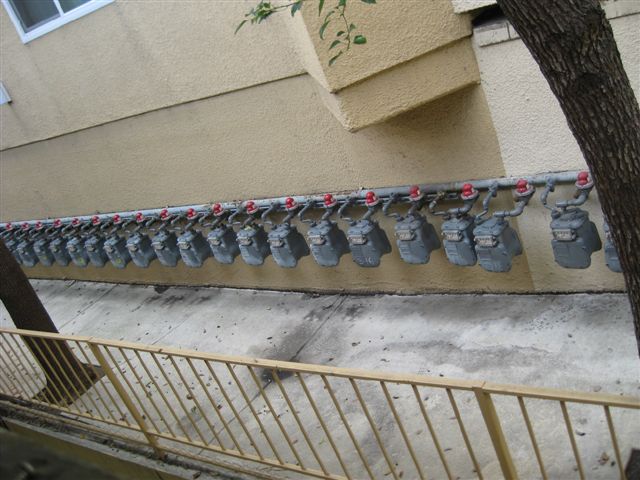
Which gas meter is mine?
Here are some pointers to detect gas leaks early so that appropriate measures can be taken to avoid major damage.
- If you suspect a gas leak, mix some bubbles using detergent with water, and cover the suspect area. If bubbles expand, you have found the leak.
- Don’t ignore a gas leak. Gas can be dangerous! Not to mention your bills will be increased.
- Disconnect your plugged-in gas heater in summer.
- When reconnecting the heater in winter and the bayonet is difficult to plug in, it is probably dusty. Dust and lubricate the connection, then try again.
- Don’t mess around with gas. If you are not sure don’t touch!
If you are not sure when it comes to a gas pipe problem, always call a licenced plumber and gasfitter.
How to Prolong the Life of Your Mains Pressure Hot Water Heater
The lifespan of a water heater is about eight to twelve years, depending on whether it is inside or out, near the ocean, or you carry out simple maintenance procedures. Modern tanks are lined with steel, and this lining can break down over time.
Here are some tips to prolong the life of your mains pressure hot water heater.
- Installing a second anode rod prolongs the life of the water heater. The anode rod undergoes corrosion as time moves on and collects this corrosion in order to prevent so much corrosion in the tank.
- A pressurised system needs a Temperature and Pressure Relief valve to be working effectively in order to prolong the life of the water heater. As water heats, it expands and needs somewhere to go. A T&PR valve will prevent stress on the water heater and the hot water plumbing system by taking the discharge.

Ease this valve regularly
- Annual flushing of an older tank will help keep it working and prevent sedimentary build-up inside the tank. Newer tanks are often self-cleaning; they may cost more but are able to last for many years to come.
- Very high water pressure can damage your appliances and cause the water heater to wear out too early. Installing a pressure limiting valve regulates system pressure and reduces the wear and tear on your hot water plumbing and your appliances.
- Scaling is a big problem for water heaters in areas where the public water systems have excess mineral contents. In many instances a water softener is the answer to this problem. The water softener reduces wear and tear on the water system and helps your soap suds up better.
Should your water heater stop working for you, be sure to call in emergency plumbing services and restore the hot water supply back in your house. The Lone Drainer and Pronto plumbing services have an emergency plumbing services number where you can reach a professional plumber twenty four hours a day to take care of any problem you may be having with the plumbing. NEVER attempt to do it yourself as you do require a qualified plumber to assist you in this situation.
Follow the suggestions mentioned and prolong the life of your mains pressure hot water heater. You want the hot water heater in your home or business to perform exactly as it should at all times. By taking care of the water heater and making sure you cover most of these things, you will save yourself the expense of replacing a whole system or the frustration of not knowing just what to do when the whole thing seems to be under performing or even leaking.
It is never nice to have a plumbing emergency, but in the unfortunate circumstance that you do, it is good to know that emergency plumbing services are available. Many reputable companies will come back the next day with a follow up to make sure that everything is working the way it is supposed to, as well as to make sure that there are no more immediate problems that could potentially shut your water off for an extended period of time.
When you have to choose a regular plumber, be sure that they have plumbing services for any emergency and reasonable charges for their plumbing services. They should also give you a price for the job upfront, before they start.
https://www.thelonedrainerandpronto.com.au/hot-water-services.html
Does Your Water Taste Different?
Since the new Sydney Water desalination plant was commissioned January 28th 2010, we have had one of the hottest and yet wettest Sydney summers in recent years.
During this hot spell, we insisted that everyone on our plumbing service team, especially the plumbers out in the field, take water bottles and re-hydrate regularly.
Some of our team believe that the Sydney tap water is “different” since the desalination plant started mixing with our traditional water source.
I had to keep drinking to test the tap water, but, I think the water tastes a little “sweeter”.
Now “portable” water as our water supply is known to plumbing professionals, should be without:
- odour
- colour
- flavour
So we started to ask some of our clients what they thought, and we got different feedback from some of them.
Some, like me, said it is sweeter. Others reported the water was a different colour. Some even believed the new water supply had caused their taps and toilets to leak. Mind you, these comments were received whilst repairing those same leaking taps and leaking and running toilets.
So, is our water supply different? What are you mixing it with? Tell us what you think via the comments box.
As an incentive for the best Sydney Water story, I have 5 exotic Golf club caps to give away, courtesy of Champion Sports.
The US Masters begins next week Thursday April 8th – Sunday April 11th, 2010 in Augusta, Georgia, so post your comments by Friday April 16th, 2010 and the 5 best Water stories will be eligible to win a prize.
Oh and keep drinking water! We recommend it.
What Will Happen If I Ignore that Gas Leak?
Many people have no clue what natural gas smells like, so how can they recognise if they have a gas leak? Chemical compounds are placed in the natural gas to give it an odour which often smells like rotten eggs. This odour ensures that when a person smells it, they would be alerted to a problem. People trained in utility services, including plumber services, have the required equipment and have been taught skills to recognise and locate leaks in a gas line.
If you ignore that gas leak and do not call plumbing services Sydney, then you are placing yourself and your family at risk of being caught in a house that in the worst case, may blow up. DO NOT ignore that gas leak. It could injure you and your loved ones.
It is VERY important to know where your gas meter is, and how to turn it off. Make a point of finding this out and ensure that everyone in your household over 15 knows where it is.
When you do notice a leak, CALL, not email, your local service area to notify them of a problem. Get everyone out of the house and do not return until someone who is licensed to provide professional plumbing services says it is safe to re-enter your home.
Recognise leaks by the smell or a hissing sound, off colour vegetation in a normally green and lush area, flames if the leak has ignited, dirt coming up from an opening in the ground, or bubbles showing up in a flooded area.
When you react, be sure not to panic children or older adults. Panic only creates more problems. Have a pre-planned escape route and make sure everyone follows the plan in a calm and orderly manner.
When leaving the area, do not turn switches for lights or appliances on or off. They could send out sparks and cause an explosion.
Don’t smoke.
Leave the area and let professionals solve the problem.
Never ignore a leaky gas line inside or outside your residence.
Finding plumbing services Sydney, which will conduct a few simple tests to locate or dismiss a leaky gas fear, is not difficult to do if you look in the phone book for plumber services.
Natural gas is very hard to detect because it has no odour that will alert you of a problem. Although gas companies have put a chemical compound in the gas so that it can be detected, usually a gas leak is something that happens slowly and is not noticeable. A regular check of gas lines around or in your house by an individual that is licensed to provide professional plumber services should be done periodically so that any leaks that might develop can be caught before it becomes dangerous.
Contact plumber services Sydney and leave the area until professionals can tell you it is safe to return.
Take precautions, ensure you have a plan in place and NEVER ignore a gas leak.
Blocked Drains…Minimise the Pain
If you have a history of blocked drains at your home, you should read the following to learn more about your drains.
Get a drainage diagram from Sydney Water and keep it handy; it’s part of your contract of sale.
- Tree roots will grow into your sewer, year in year out, through the joints in earthenware pipelines or where they meet PVC pipes. They will come back!
- Don’t ignore gurgling drains or siphoning pan outlets. They are a sure sign of a blockage.
- Investigate smells, they usually mean trouble.
- All plumbing fixtures, WC, basin, sink, bath, laundry tubs, kitchen sink etc. have an S or P trap, or water seal underneath. This trap is not to catch your diamonds (which we have successfully retrieved in the past), it is there to prevent the smell of the sewer coming into your home. If you have a bad smell in the bathroom or laundry it may be because the water seal in the floorwaste has dried out. This means the floorwaste is acting as a direct vent off the sewer and that’s why it smells. So an easy fix is to get a torch and see if the floorwaste is dry; if it is, get a bucket or jug of water, add disinfectant or bleach and tip it in. If the smell persists, it’s a job for the Lone Drainer and Pronto!
- Remove hair from your shower or bath drains. Bin it, burn it or flush it.
- Keep a simple sink plunger in your home tool kit.
- Don’t put sanitary products (tampons, napkins etc) or dental floss down the loo. Dental floss is like fishing line, very tough, it wont break down, it will cause a blockage!
- Only use toilet paper. Not tissues or newspaper. (Try the tissue-toilet paper test. Put them in a bucket and run water over them. See what happens).
- Toilet deodorisers that hang over the edge of your loo are not recommended! They fall in and no one wants to put gloves on and retrieve them, so they flush them down and guess what? They will help put a plumbers kid through uni!
- If you do hire an electric eel and try to clear a blockage yourself, exercise caution, they are a dangerous weapon in the hands of a novice and may cost you more money than you save!
If you need any help with this go to https://www.thelonedrainerandpronto.com.au/blocked-drains.html
Water or wine. Is there bacteria in water?
As Ben Franklin said; “In wine there is wisdom, in beer there is freedom, in water there is bacteria.”
In a number of carefully controlled trials, scientists have demonstrated that if we drink 1 litre of water each day, at the end of the year we would have absorbed more than 1 kilo of Escherichia coli, (E. Coli) – bacteria found in faeces.
In other words, we are consuming 1 kilo of poo..
However, We DO NOT run that risk when drinking wine & beer (or tequila, rum, whiskey or other liquor), because alcohol has to go through a purification process of boiling, filtering and or fermenting.
Remember:
Water = Poo, Wine = Health.
Therefore, it’s better to drink wine and talk stupid, than to drink water and be full of S _ _ t.
There is no need to thank me for this valuable information, thank my mate David Weekes.
I’m providing it as a public service!
HELP! I’ve got a burst pipe in my bathroom!
This post is relevant to a Randwick plumbing emergency that happened yesterday.
We had an SOS from a long term client “Joan”.
You could hear the panic in her voice. “Come quickly, we have a burst water pipe under our vanity basin and we can’t turn the water off” screamed Joan.
“Is your floor waste drain clear?” we asked. “Yes” Joan replied!
We told her how to minimise the water damage by shutting the cupboard doors and direct the gushing water towards the floor drain, and then putting a towel across the doorway to keep the water flow in the bathroom.
We were at the house within 15 minutes, and with a large pair of grips, we were able to slow down, but not stop the water flow.
Now, a picture paints a thousand words and this short video will actually take you there.
Please watch and learn.
It’s incredibly simple to figure out where and how to turn off your hot water and cold water supply if you know where they are, and avert any plumbing emergency.
I want you to have our plumbing Hints and Tips, they are free. Simply fill in the box on our home page to get our Plumbing Hints and Tips.
I know they will save you thousands of dollars!
Plumber rescues Puppy
In early June this year, a young boy in Britain decided to give his one week old puppy a bath using quite an odd method; putting him in the toilet bowl and giving it a flush. The dog was sent down the pipe, well out of reach from the fire brigade who were first on the scene in an attempt to rescue the pup.
A plumber was called in and using a drain camera he found the dog amazingly still alive hours after being flushed about 20 metres from the house. Neighbours from surrounding houses were told to not use water in order to prevent the dog being washed down into the main sewer where rescue attempts would be impossible. The pup was able to be pushed down the line by the plumber towards a manhole where it was pulled to safety. It has been named “Diana” after the company that rescued it.
https://www.thelonedrainerandpronto.com.au/plumbing_services.php
Why you should ‘Dial Before You Dig’
Before carrying out any excavation for plumbing repairs, your licensed plumber should do a “Dial before you Dig” check on your property and surrounds.
This process shows where gas, water, sewer, stormwater, telecom and electric services owned by all utilities are located.
Although this is an extreme case, check out what could happen if you don’t know what lies beneath:
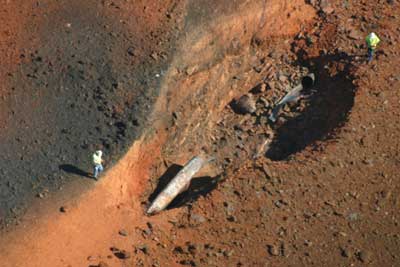
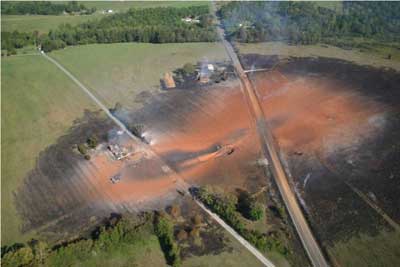
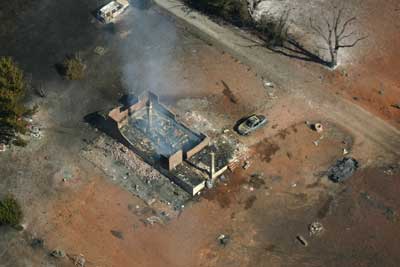
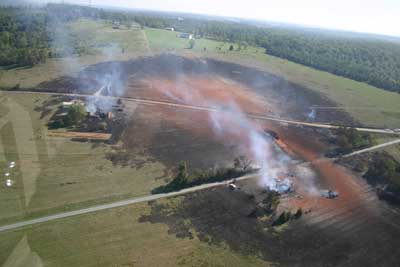
This massive explosion occurred in the USA during September 2008. Although it was caused by pipe corrosion, and not by a farmer digging as several emails have suggested, the extreme destruction seen in the photographs above shows the extensive damage that can be caused by an exploding gas pipe, and how obvious it is that this should be avoided at all costs.
If you’re not sure about the condition of your gas pipes, call a licensed plumber, and remember to always dial before you dig!
Danger of Gas Room Heaters
We opened the heater to have a good look inside and it appeared that the motor had overheated and had started to melt the casing. It was a disaster waiting to happen!
Fortunately there was a tradesman working next door who quickly came on the scene and disconnected the gas appliance from the gas supply, preventing a potential fire!
As the days get colder and we turn to our gas room heating appliances to keep us warm, please dust them and make sure you can disconnect them from your gas bayonet fittings with ease.

Dangerous gas room heater
Fixing a Blocked Drain with The Electric Eel!
I asked Bruno, the plumber, to attend to a blocked drain at a well-known food shop in Bondi as I was on crutches and could not do so myself.
Whilst Bruno was fixing the blocked drain he rang me to say that he couldn’t get the electric eel out of the drain pipe and could I come and help. My wife (who was 8 months pregnant at the time) drove me to the site and I limped in and found Bruno with the electric eel over an access drain with the eel cables stuck fast!
“What happened” I asked. Bruno said, “The eel cables just kept going in, so I kept on putting them in”.
“How much cable is in that hole”? I asked. “About 45 feet” (15 metres) he replied!
“How far to the blocked toilet”? I asked” “About 10 feet” he replied! I cringed!
I held on to my crutches and tried to help Bruno drag that electric eel out of that pipe. It wouldn’t budge!
Fortunately for us, the house behind the shop was vacant …. except for the “beast” that had been unleashed in the bathroom. The extra 35 feet of eel had come out through the back of the toilet, done a complete circuit of the small bathroom, then out the door and down the hallway towards the kitchen. The spinning action of the eel had allowed it to grab the old carpet hall runner in a “death roll”. When we had tried to wrestle the eel from the pipe, the old carpet had got stuck fast!
We were of course able to salvage the situation, had the carpet cleaned, replaced the loo and successfully cleared the blockage.
Some 12 years later when I have a coffee with Bruno (who now has his own very successful plumbing business) and we laugh about our daily plumbing lives, telling those gathered about the dangers of the electric eel, Bruno still blushes and says “David, it’s just The Nature of The Beast“!
Plumbing Tip: Don’t keep putting your resources into a black hole!
https://www.thelonedrainerandpronto.com.au/plumbing_services.php
Plumbing Industry ‘Food Safe’ Cleaners
I am often asked how surfaces that need to be ‘food safe‘ e.g. in cafes, restaurants and any establishments that prepare or manufacture food products or meals, should be kept clean.
A colleague, Gavin Buckett, of The Gourmet Guardian is a food safety specialist and has this advice to offer.
In the food industry, most people are aware that bacteria in food can be dangerous. This is particularly so if the food is served by someone who hasn’t washed their hands or if the food has been stored at the wrong temperature. Equally as well known, is that no one wants to find a foreign object such as a Band-Aid, piece of metal or a cigarette butt, in their food.
Hazard Analysis and Critical Control Points (HACCP) is an internationally recognised preventative food management system, and ALL food safety hazards are categorised into only one of three different types.
The first example is called a microbiological hazard and is caused by one of three problems: the food hasn’t been handled, stored or transported properly.
The second example is called a physical hazard. That is any foreign object or extraneous matter that you would not normally expect to find in that particular food product.
The third type of hazard is called a chemical hazard and is often forgotten or disregarded. Chemical hazards are chemical substances that can cause poisoning or illness if they are not adequately removed or if excessive levels are present. We all use chemicals to clean, but did you know that if you use the wrong chemical or use a chemical incorrectly; what you are doing may be more dangerous than not washing your hands before handling food? Cleaning chemicals are vital in ensuring that dangerous bacteria is removed from our kitchens and food contact surfaces, but you must ensure that they are used correctly.
In a separate Blog Post I explain how “Chemicals can clean, but chemicals can kill”, but in short, you must ensure that if you are using a chemical in a kitchen or food processing area, that the chemical is “Food Safe”.
A Food Safe chemical is a chemical that:
- Is designed for use in the food industry
- Will not contaminate food or food products if used correctly
In Export Meat Establishments ALL chemicals that are used, must have been approved by the Australian Quarantine and Inspection Service (AQIS). As a rule of thumb, I recommend to my clients to ONLY use chemicals that have been approved by AQIS, even if they aren’t export registered establishments. The cost of acquiring this approval is $200 and is valid for five years; so if a chemical supplier is not prepared to have the chemical registered then they can’t be serious about it’s suitability for use in the food industry. Once the chemical is approved, it must be used as it is intended to be used. Even if a chemical is deemed food safe, there are some chemicals that are not suitable to use on a food contact surface (such as a disinfectant or floor cleaner).
Always check on the Material Safety Data Sheet (MSDS) its:
- Intended use
- Correct dilution
- Any Personal Protective Equipment (PPE) that might be needed
- If it needs to air-dry OR be rinsed off after the exposure time
If the MSDS does not state that it is intended for use in food premises, then the chemical must not be used.